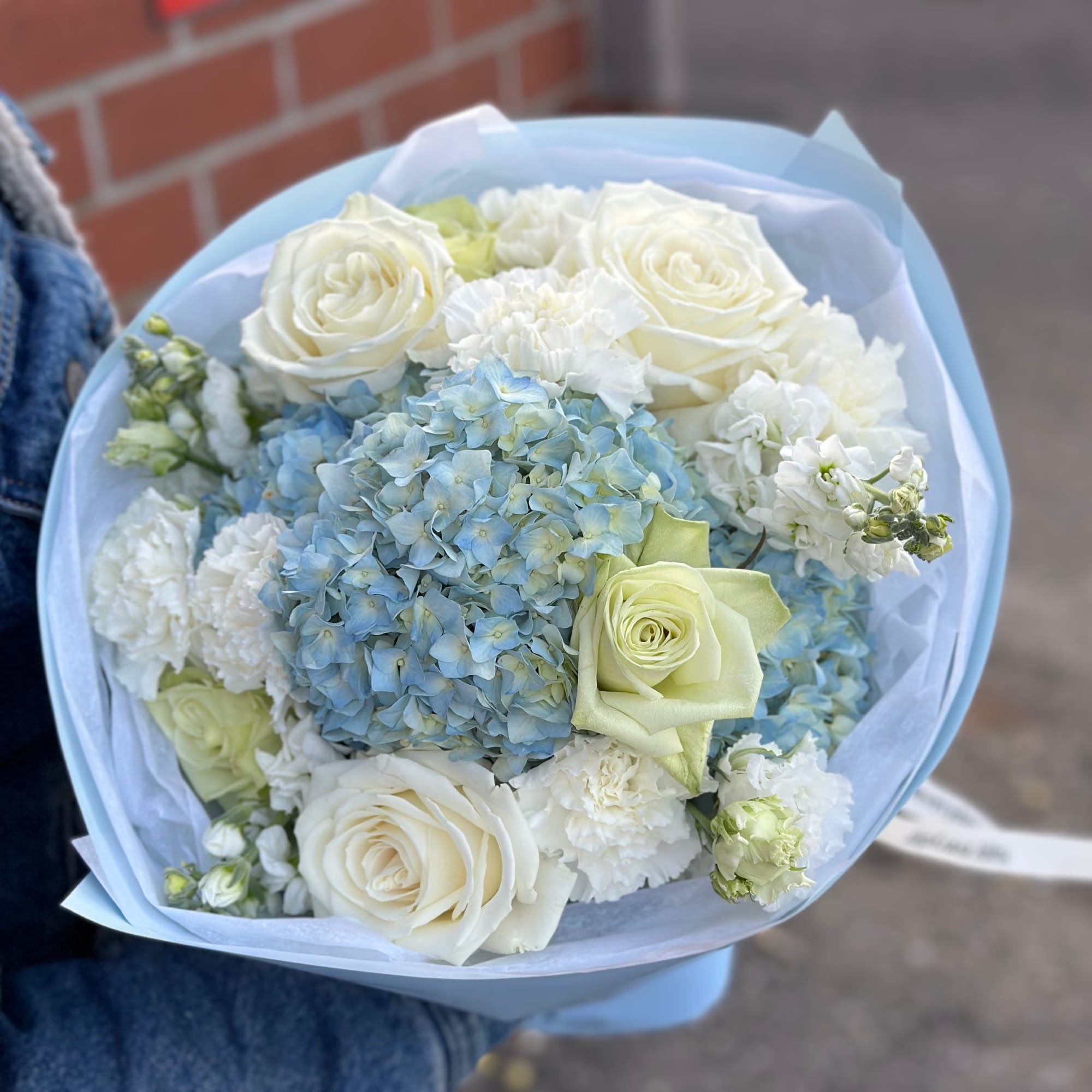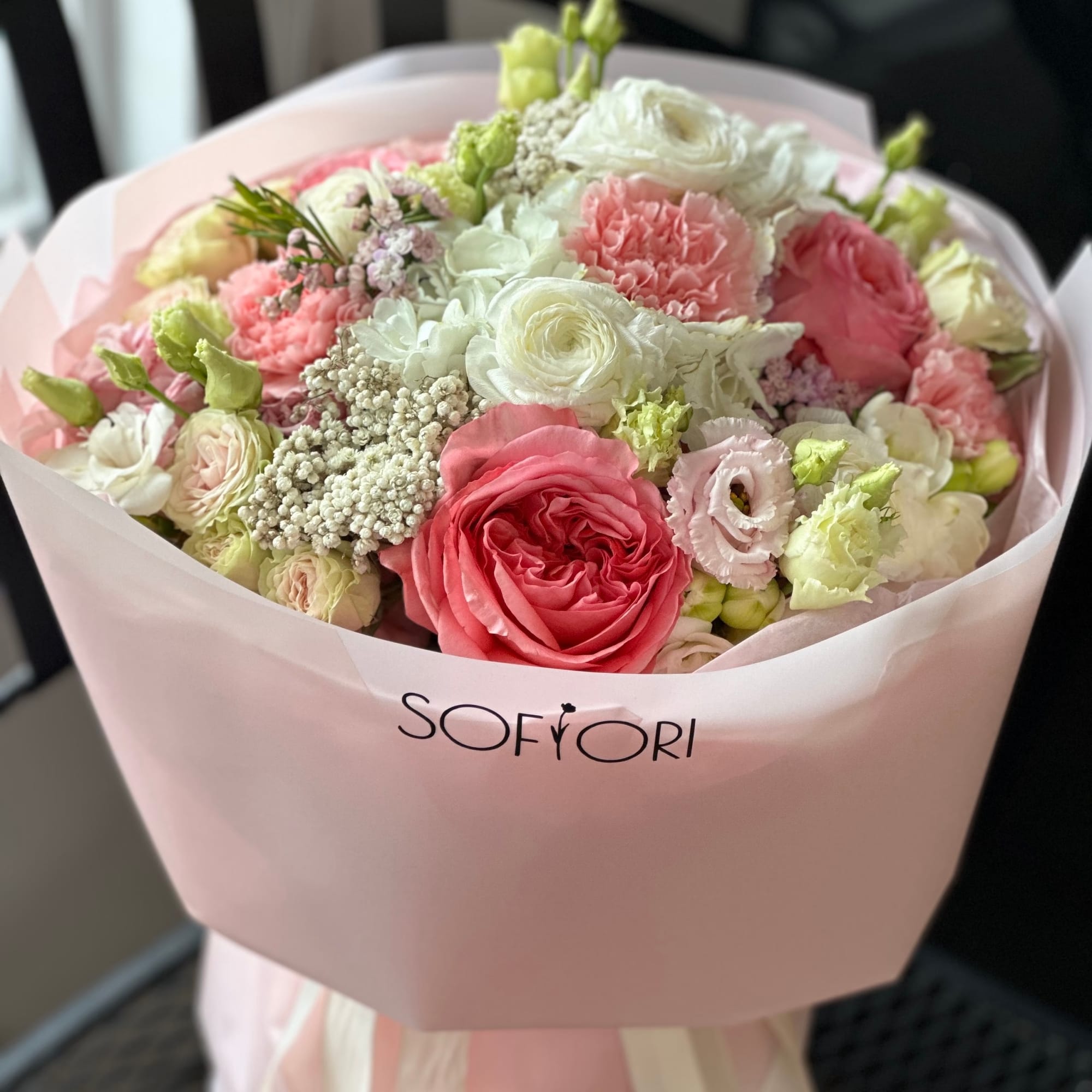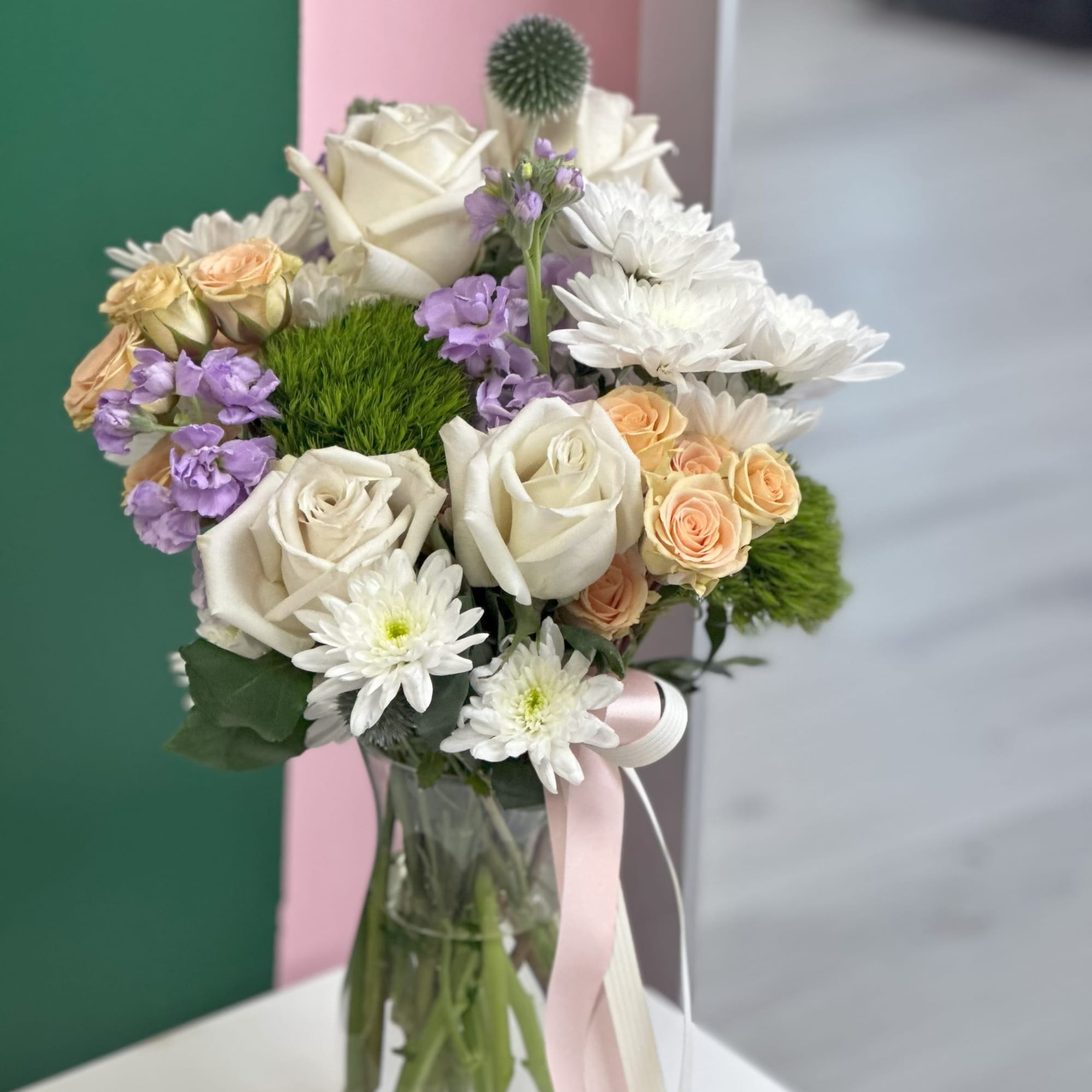
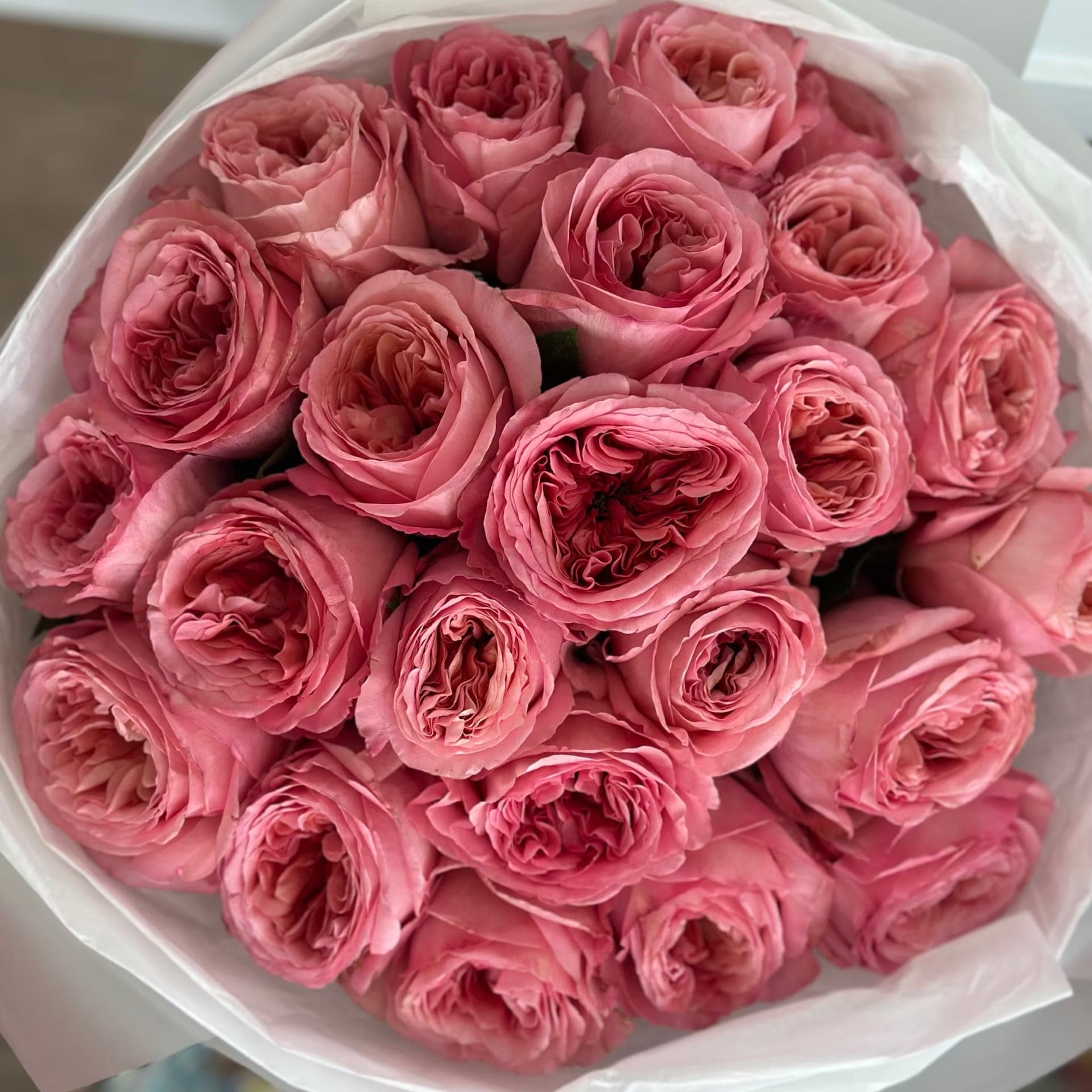
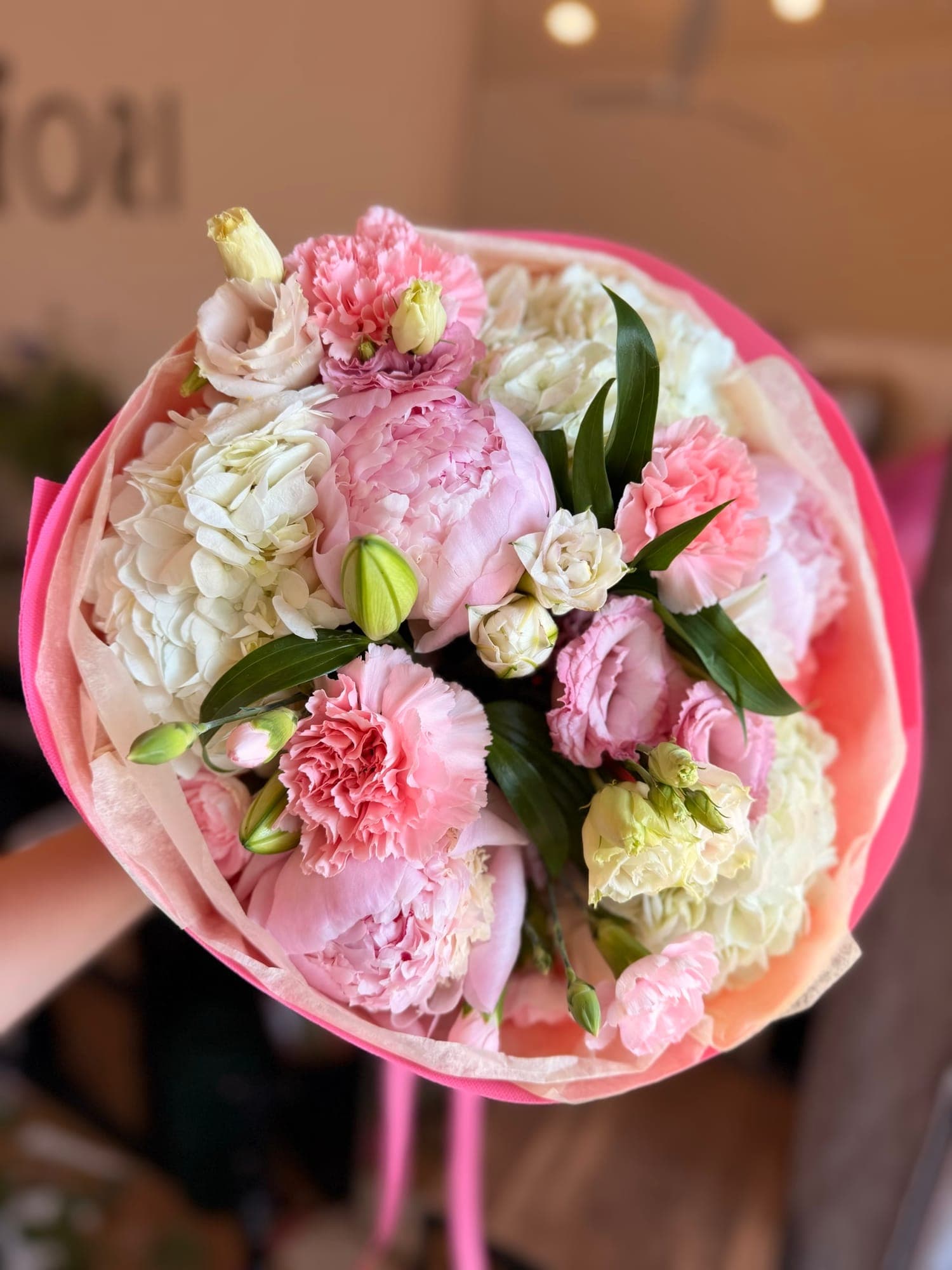
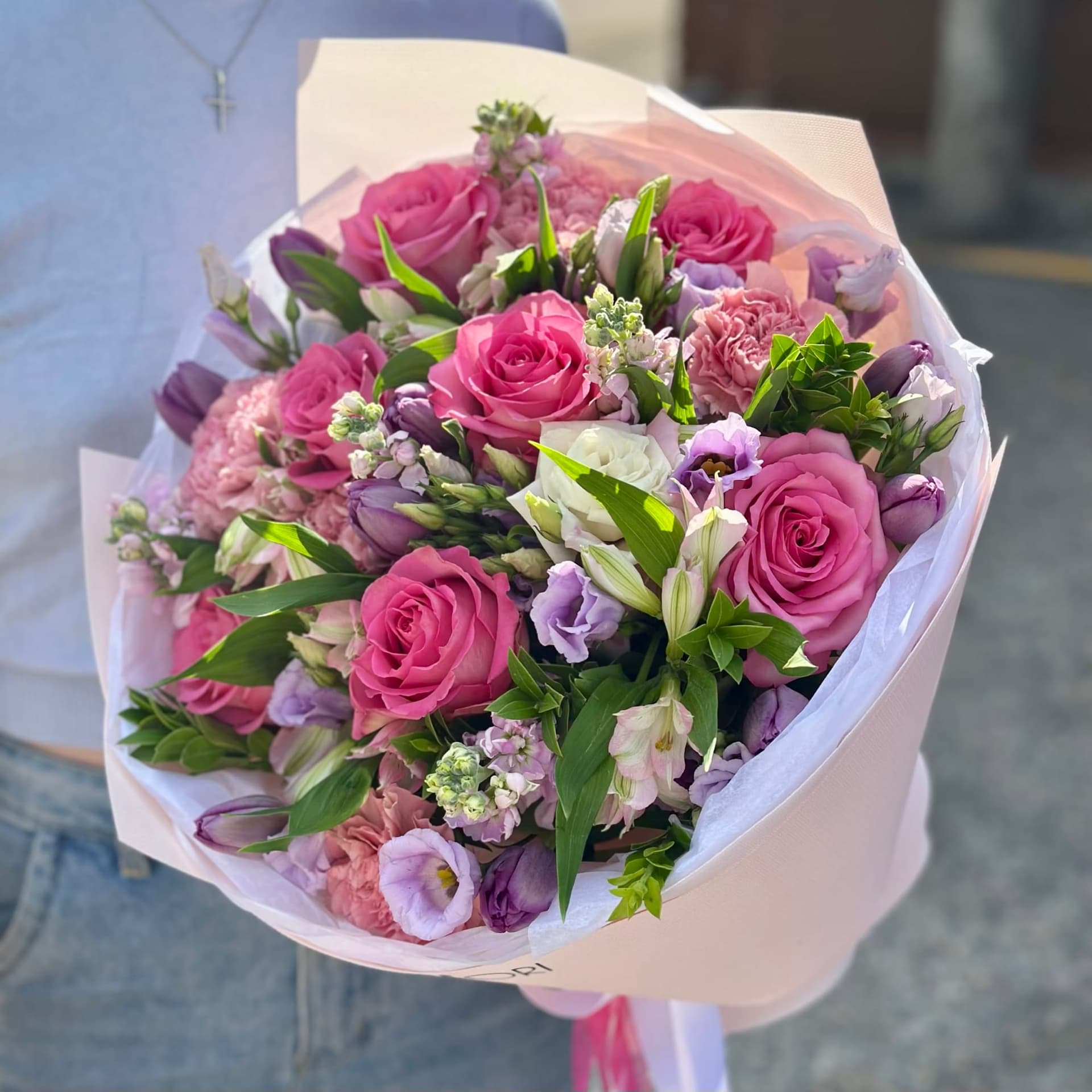
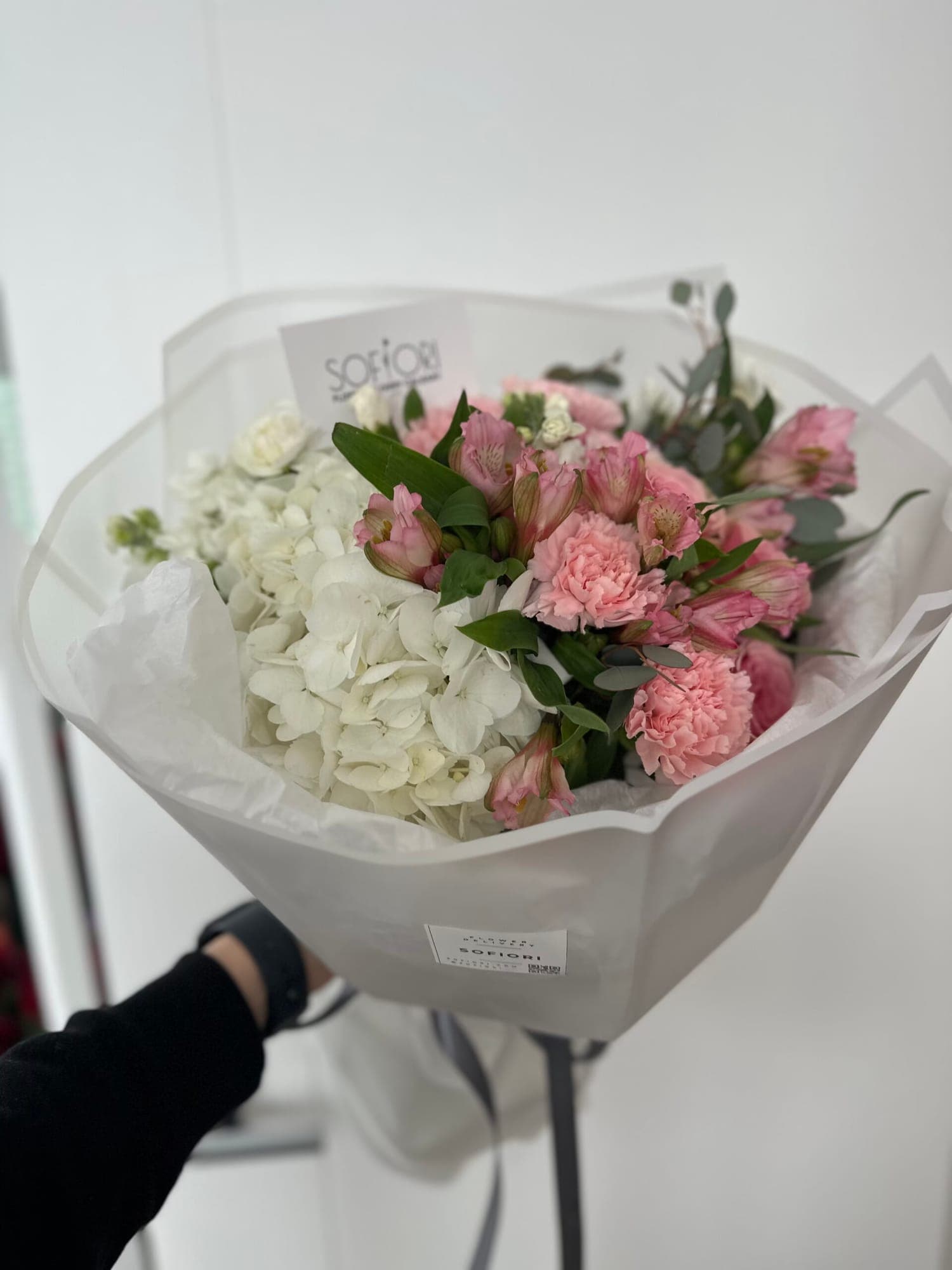
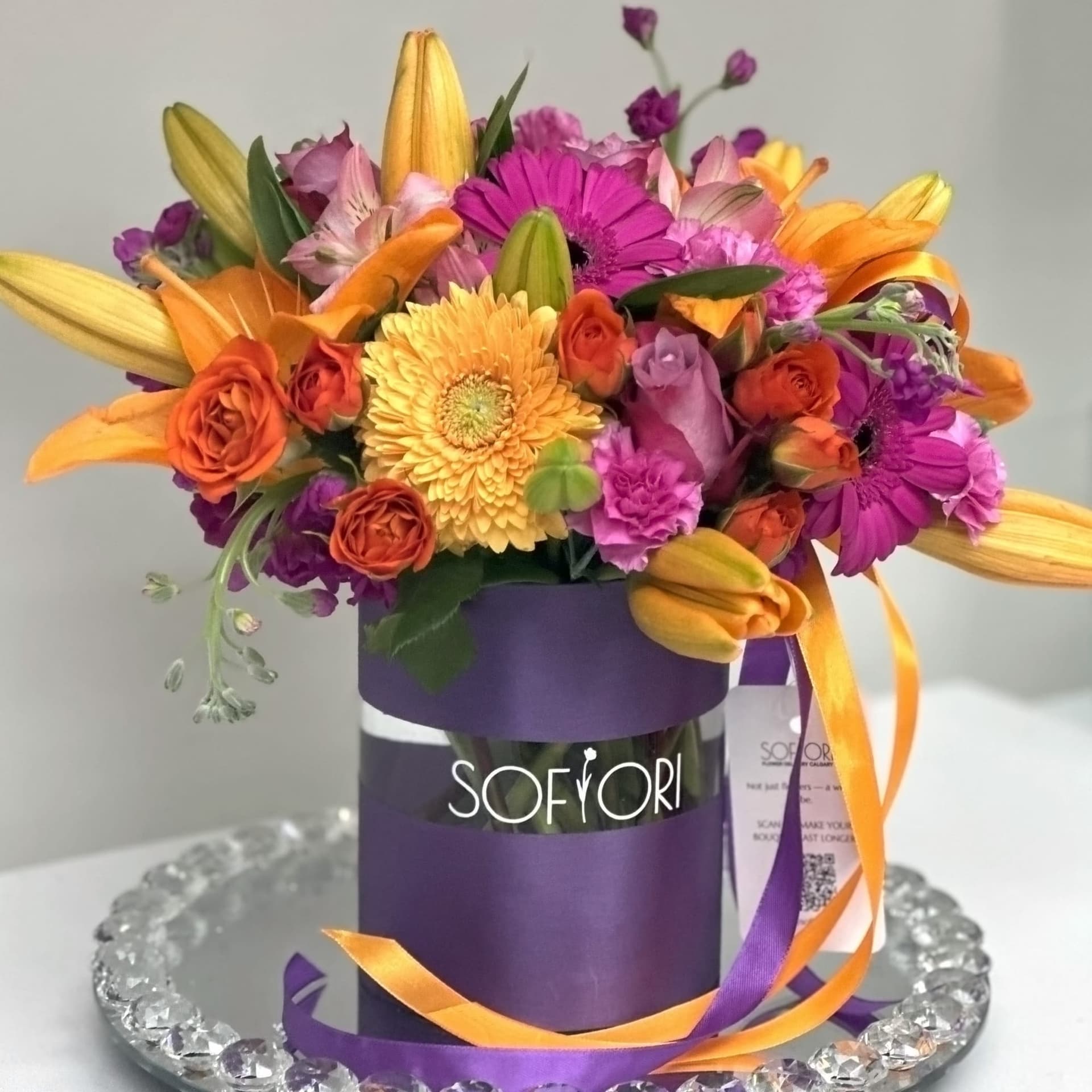
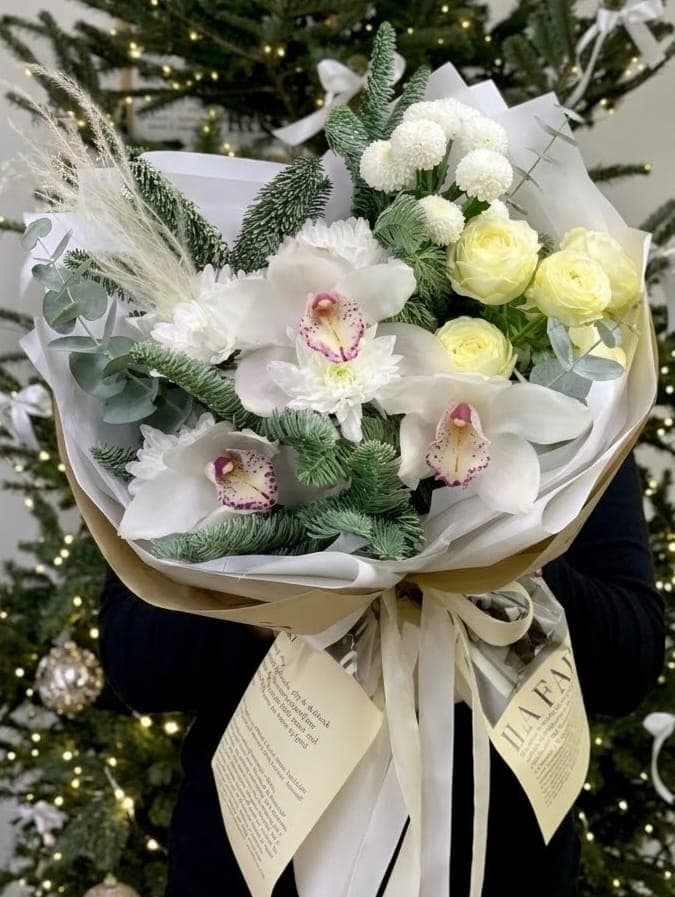


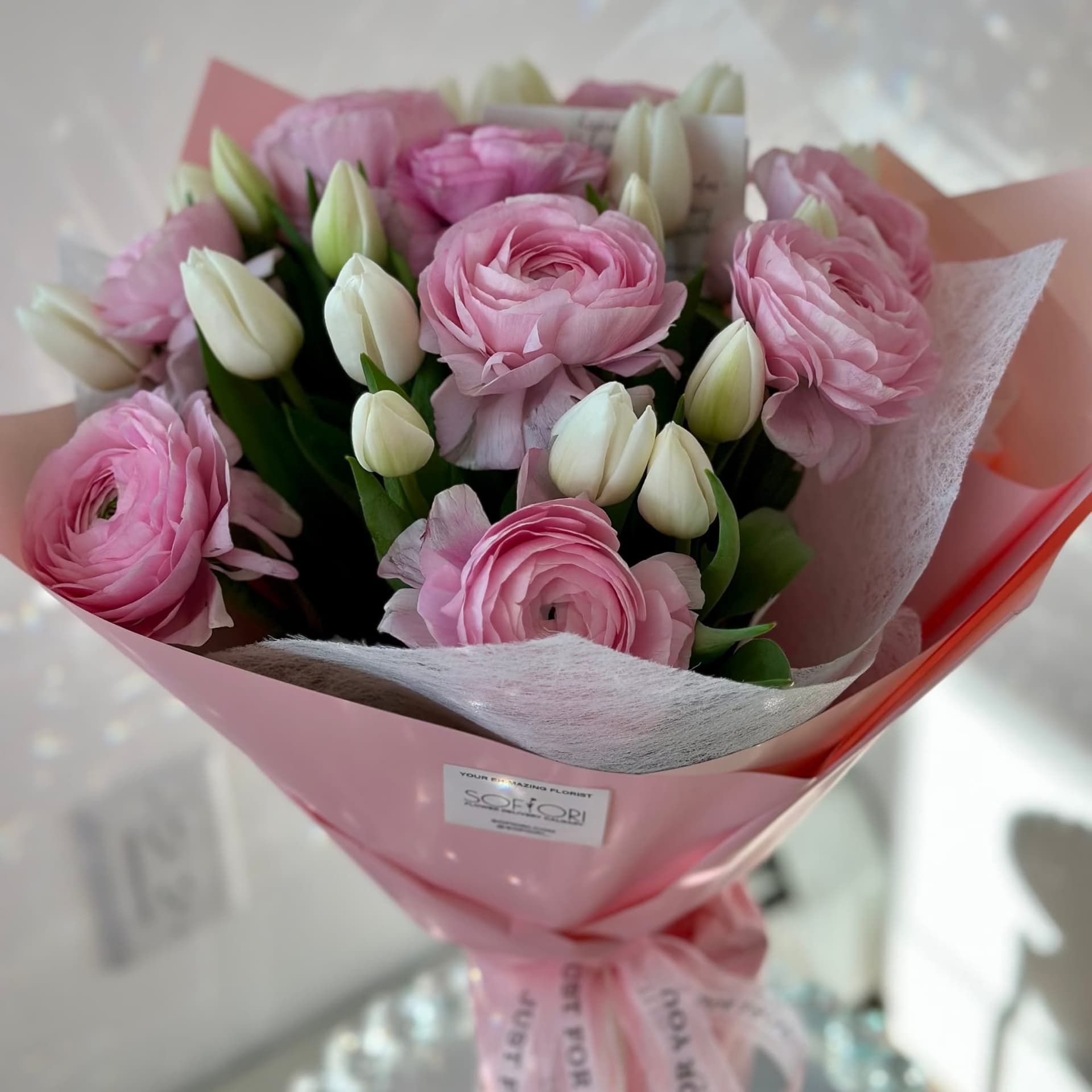
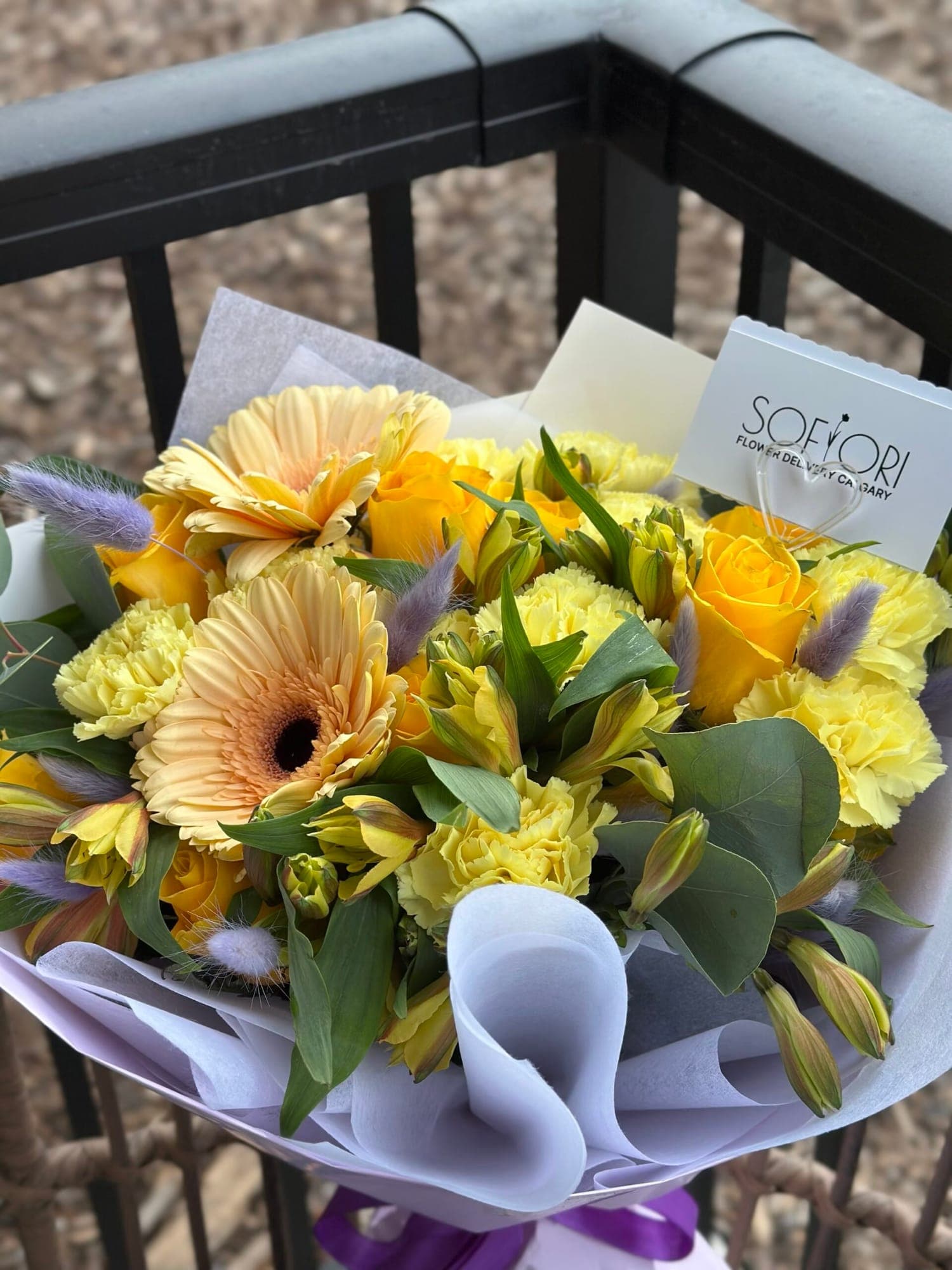
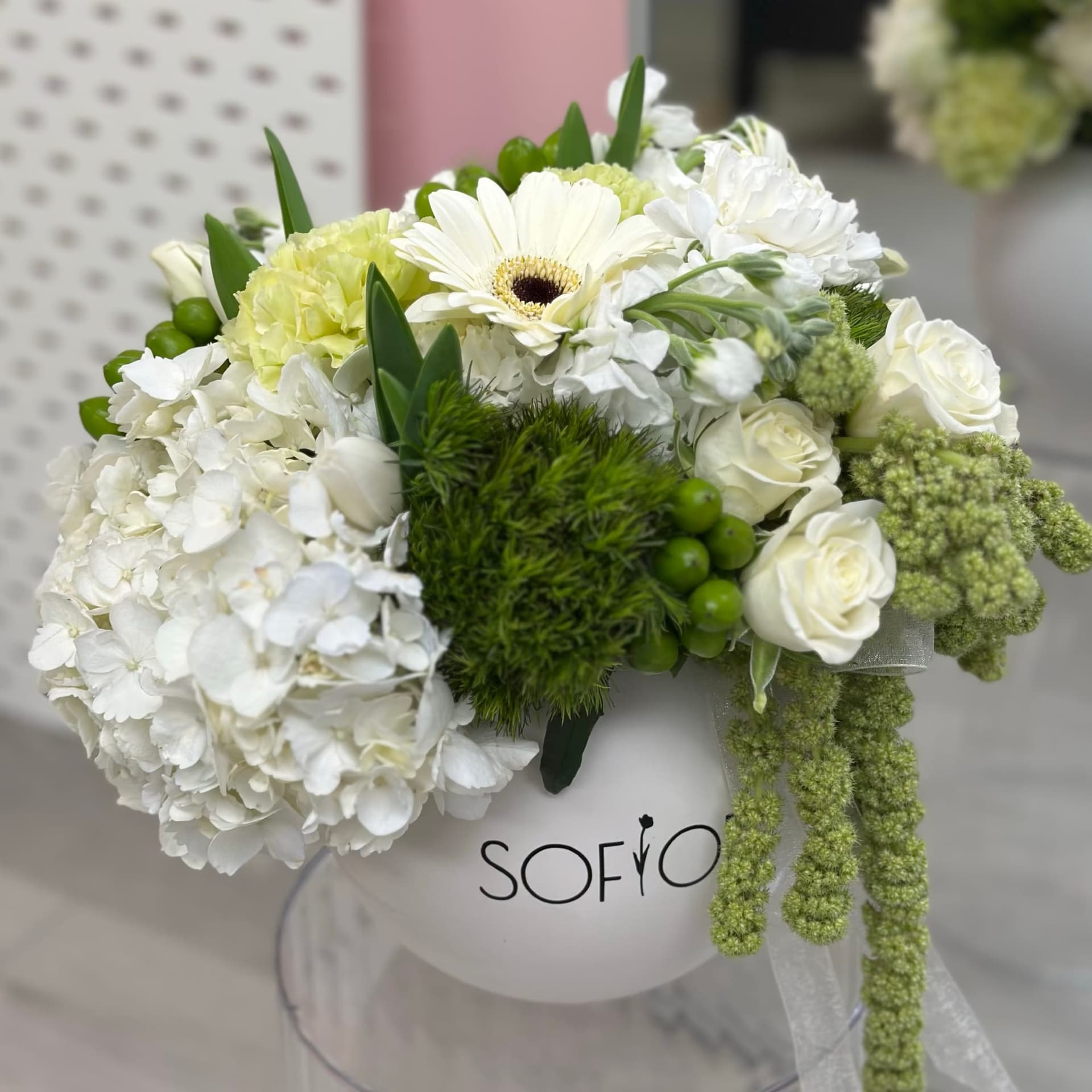
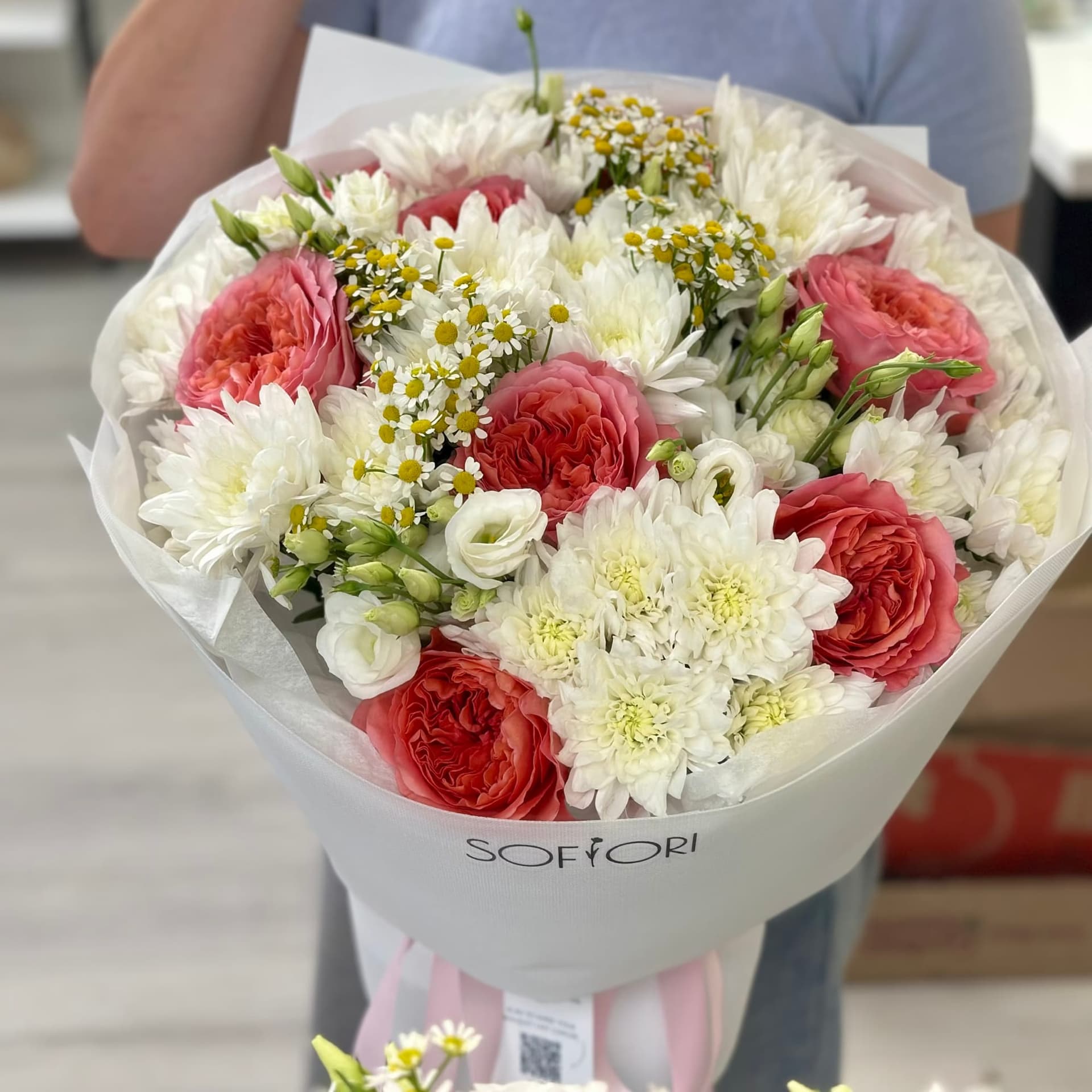
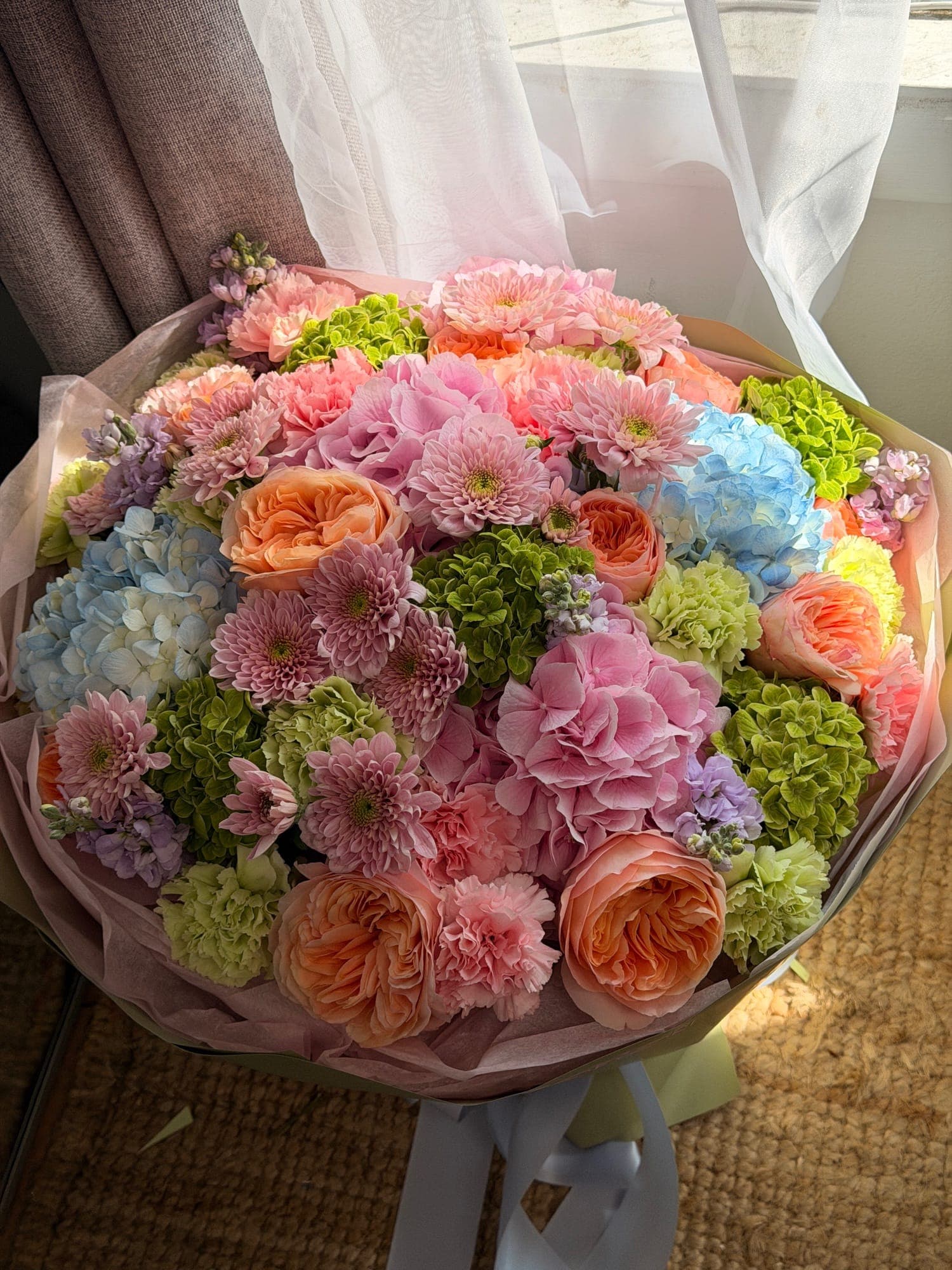
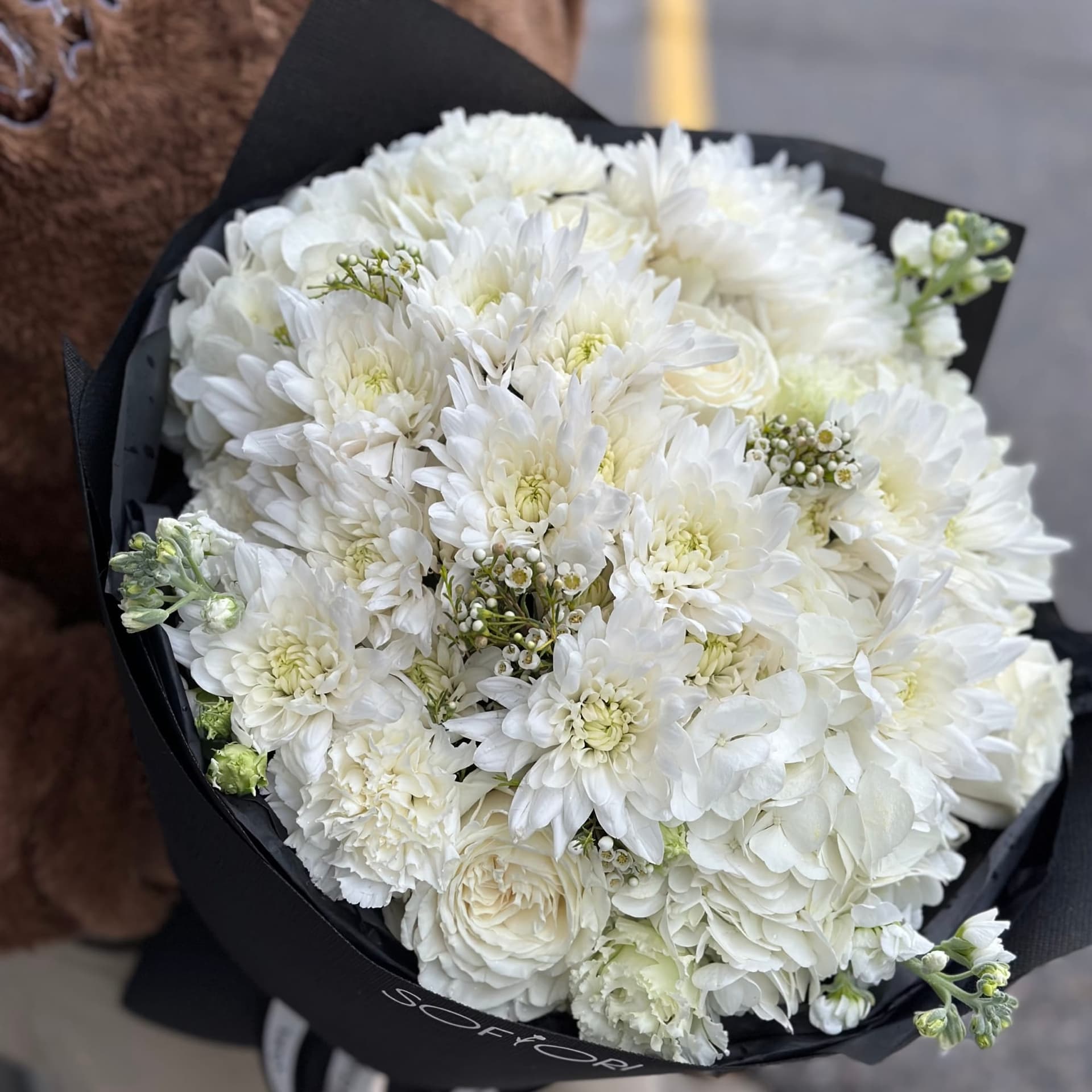
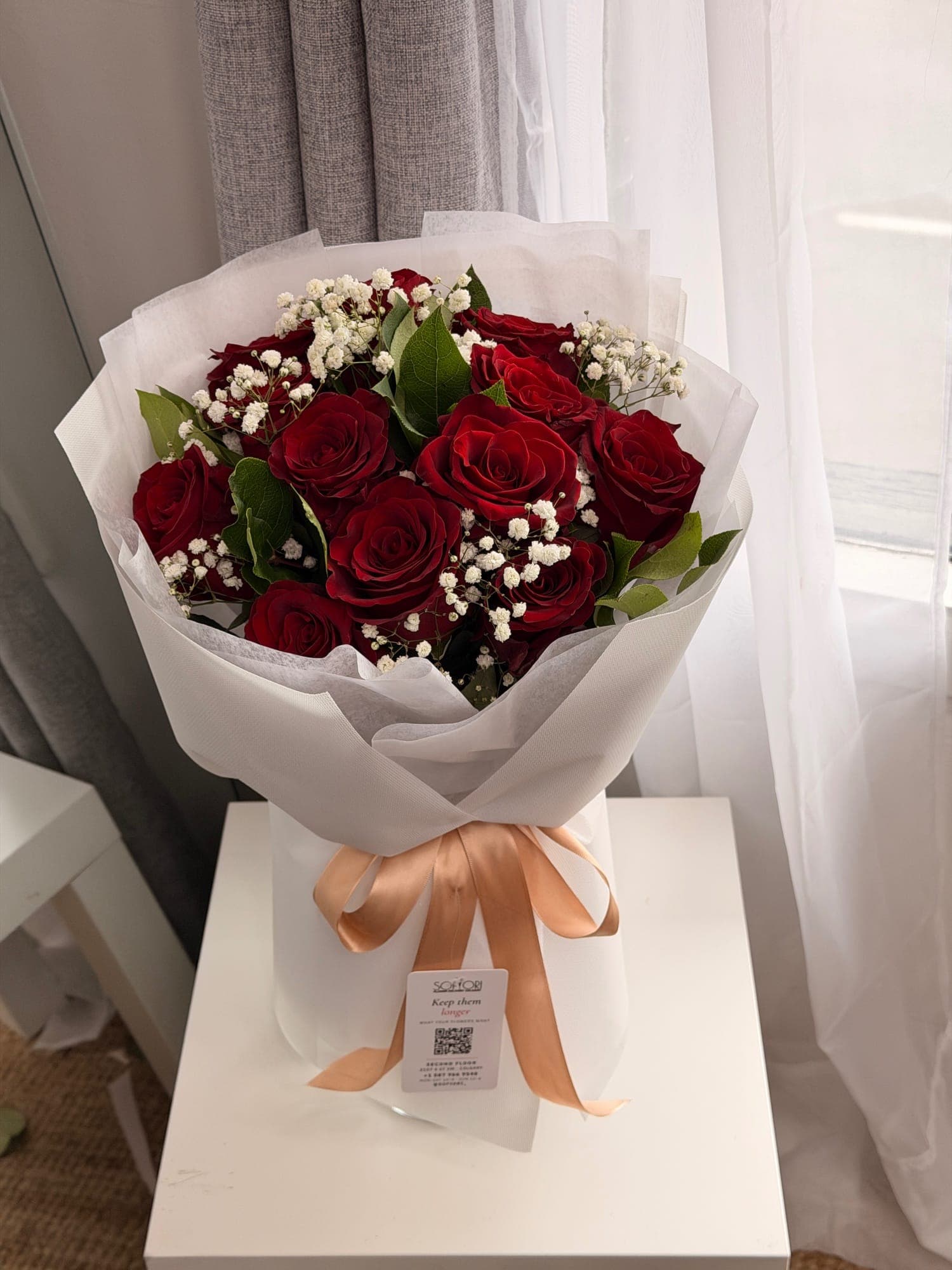
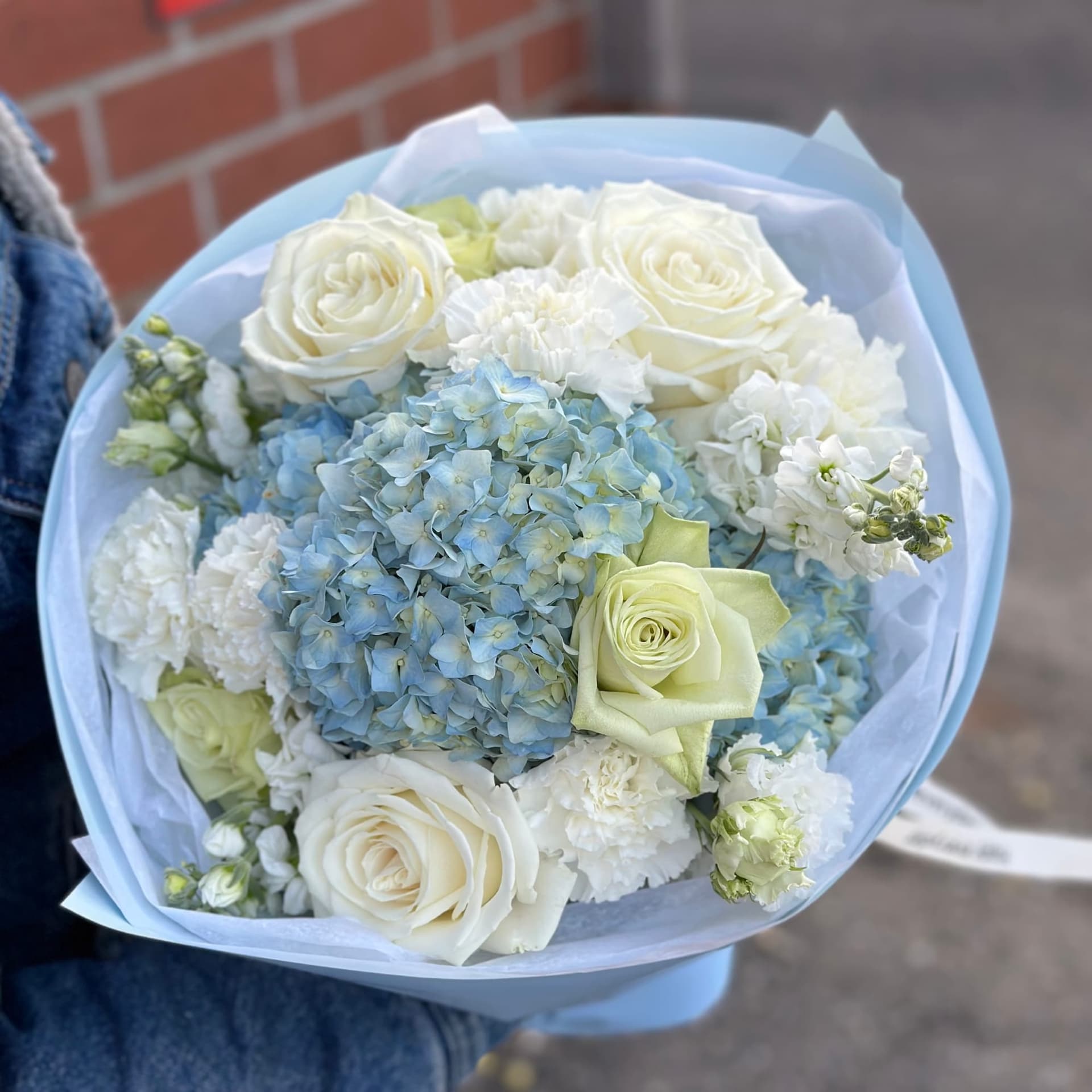
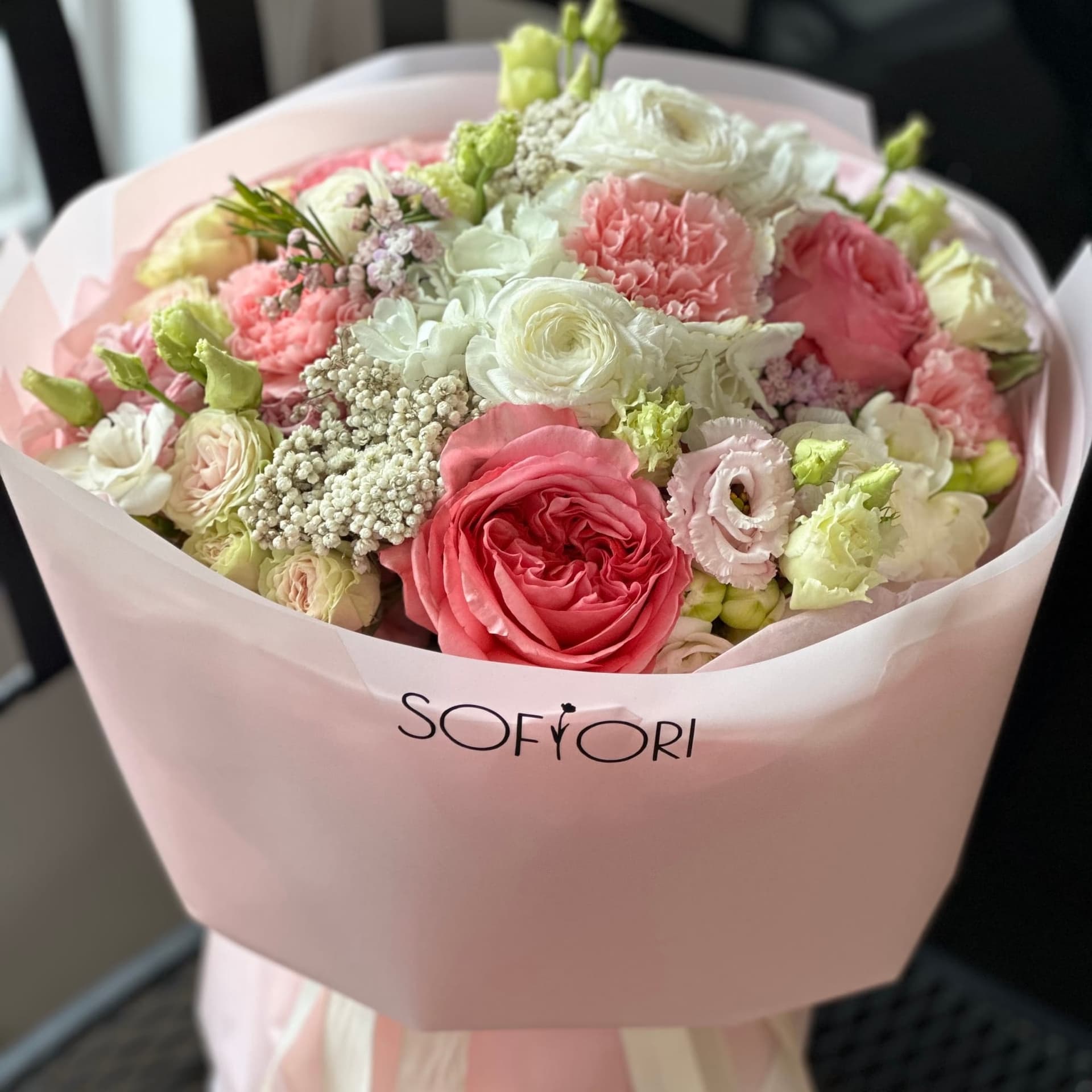
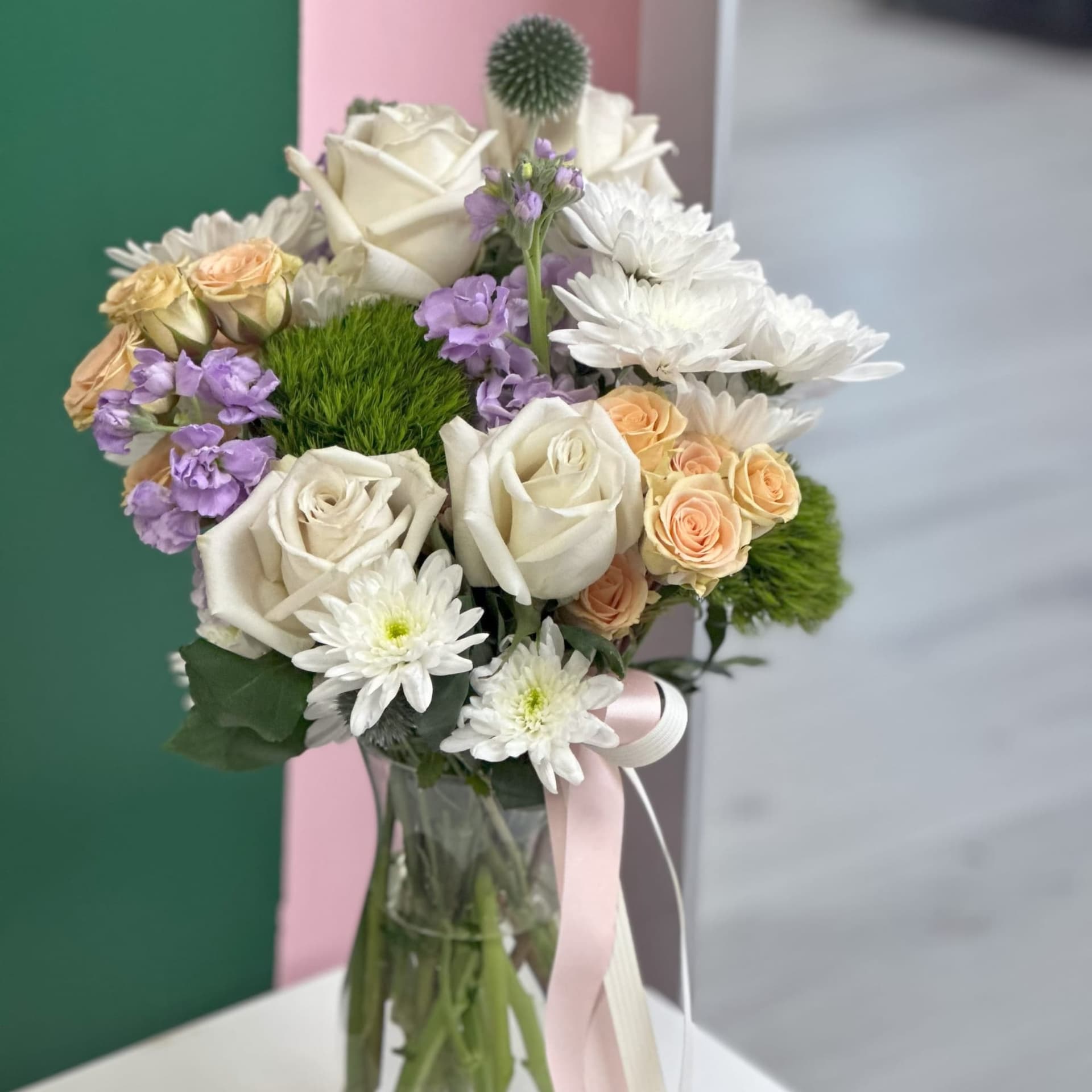
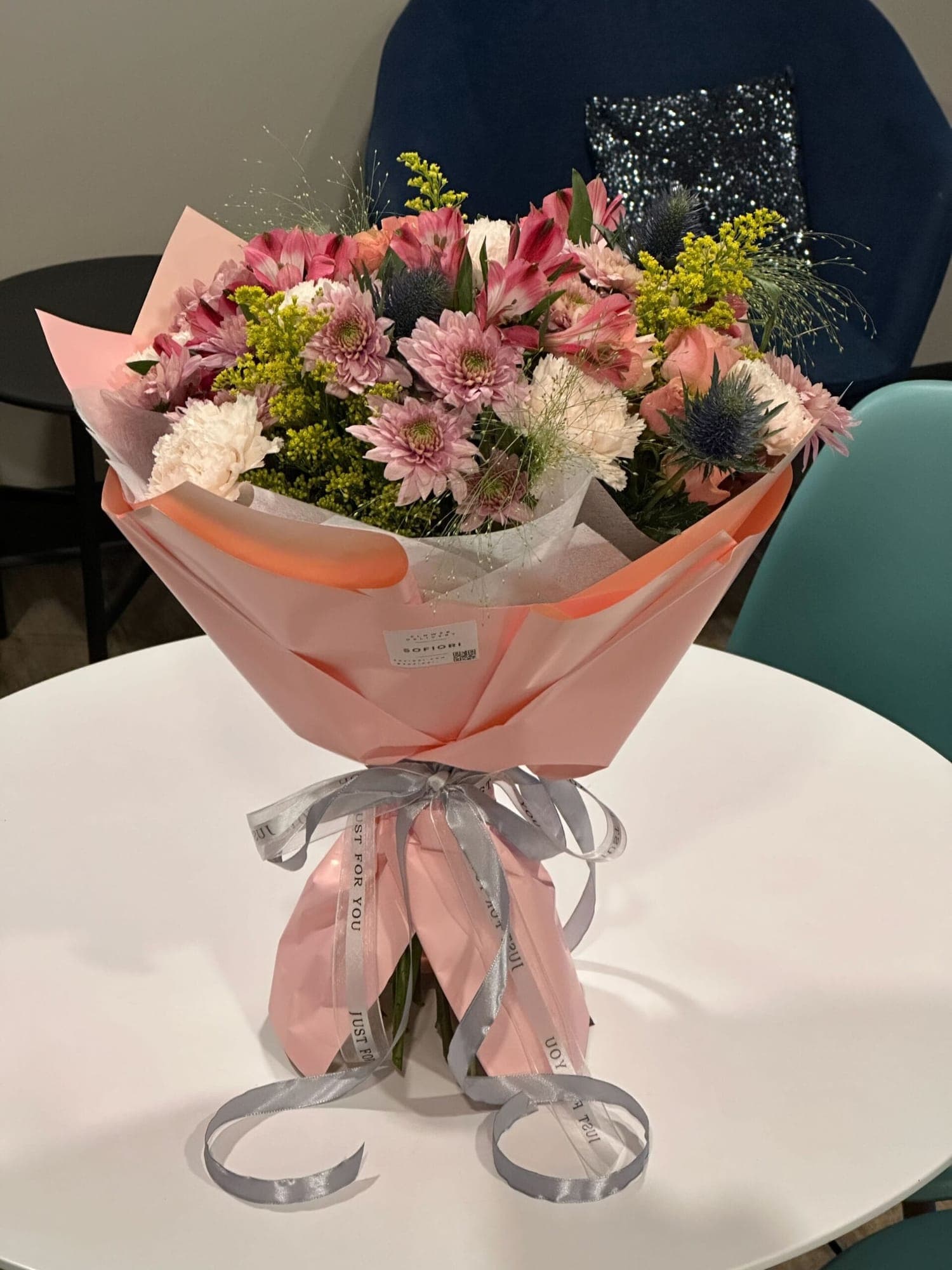
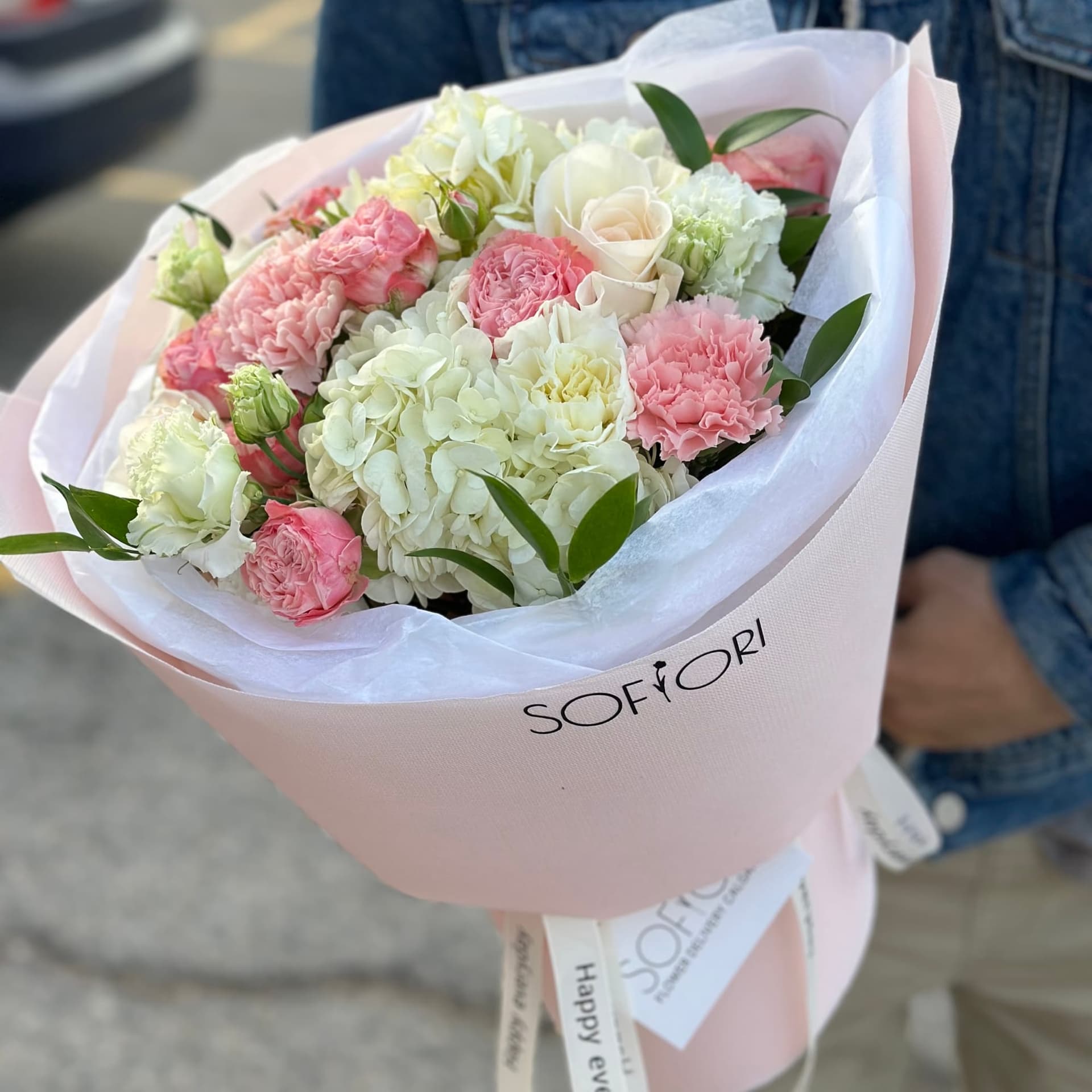
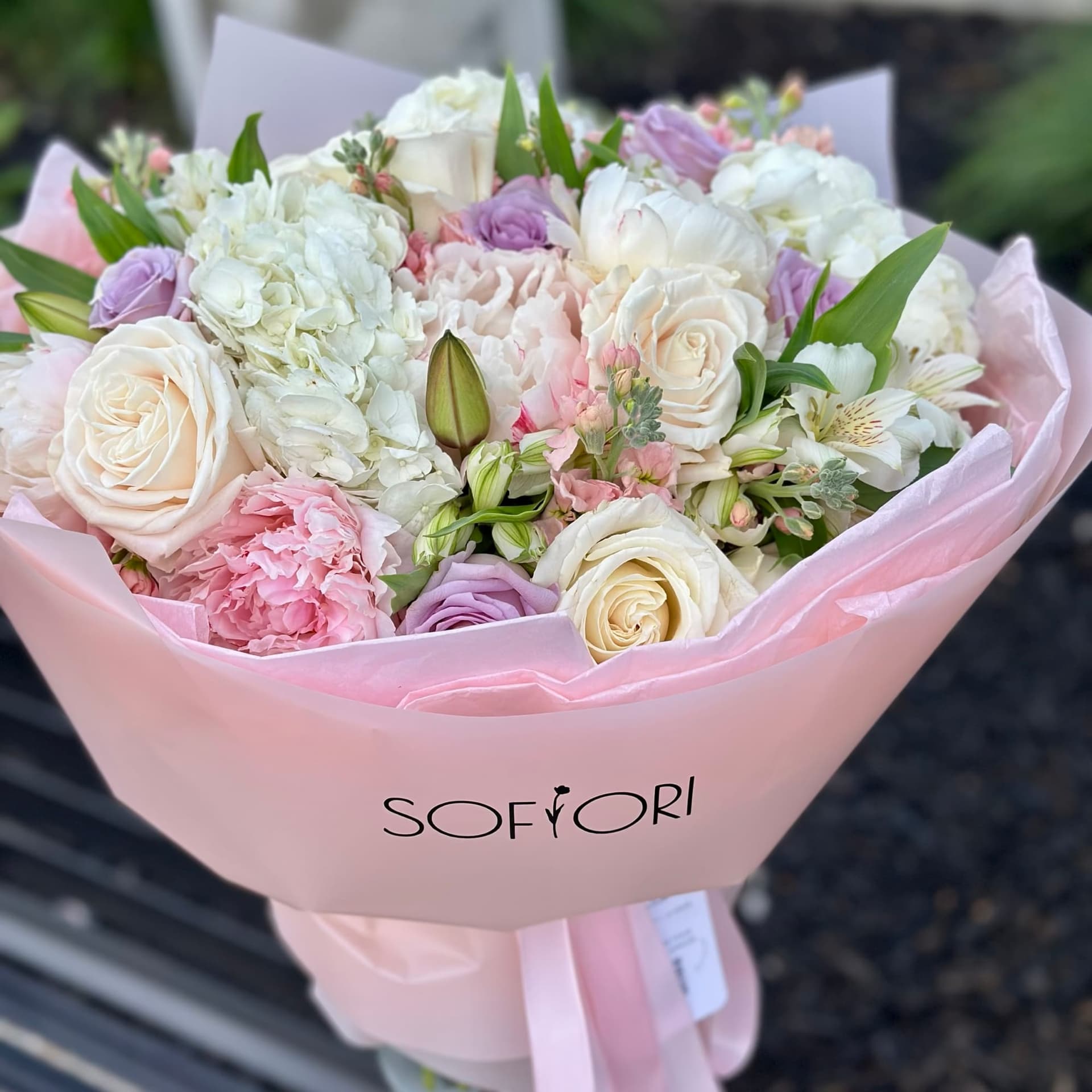
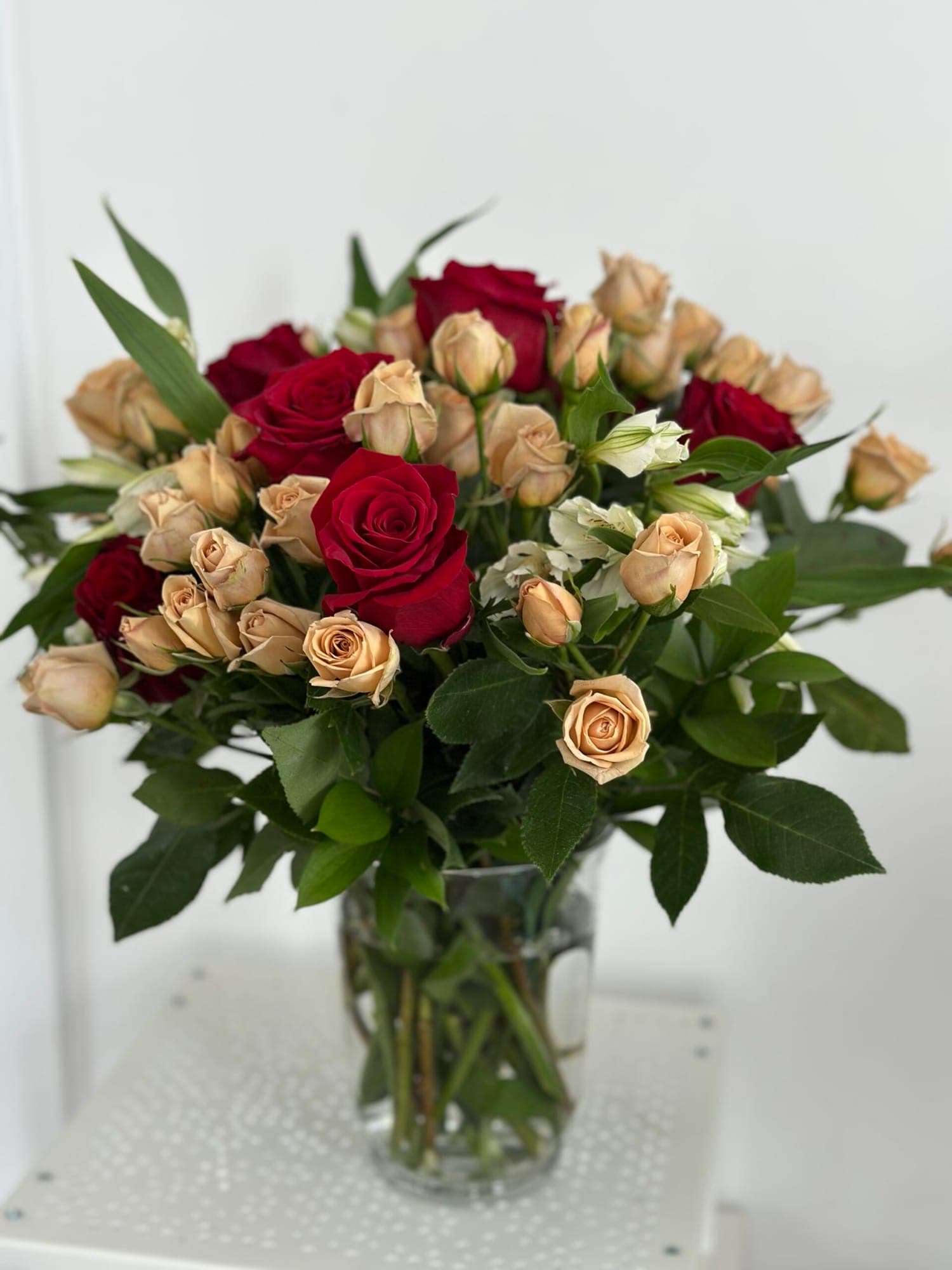
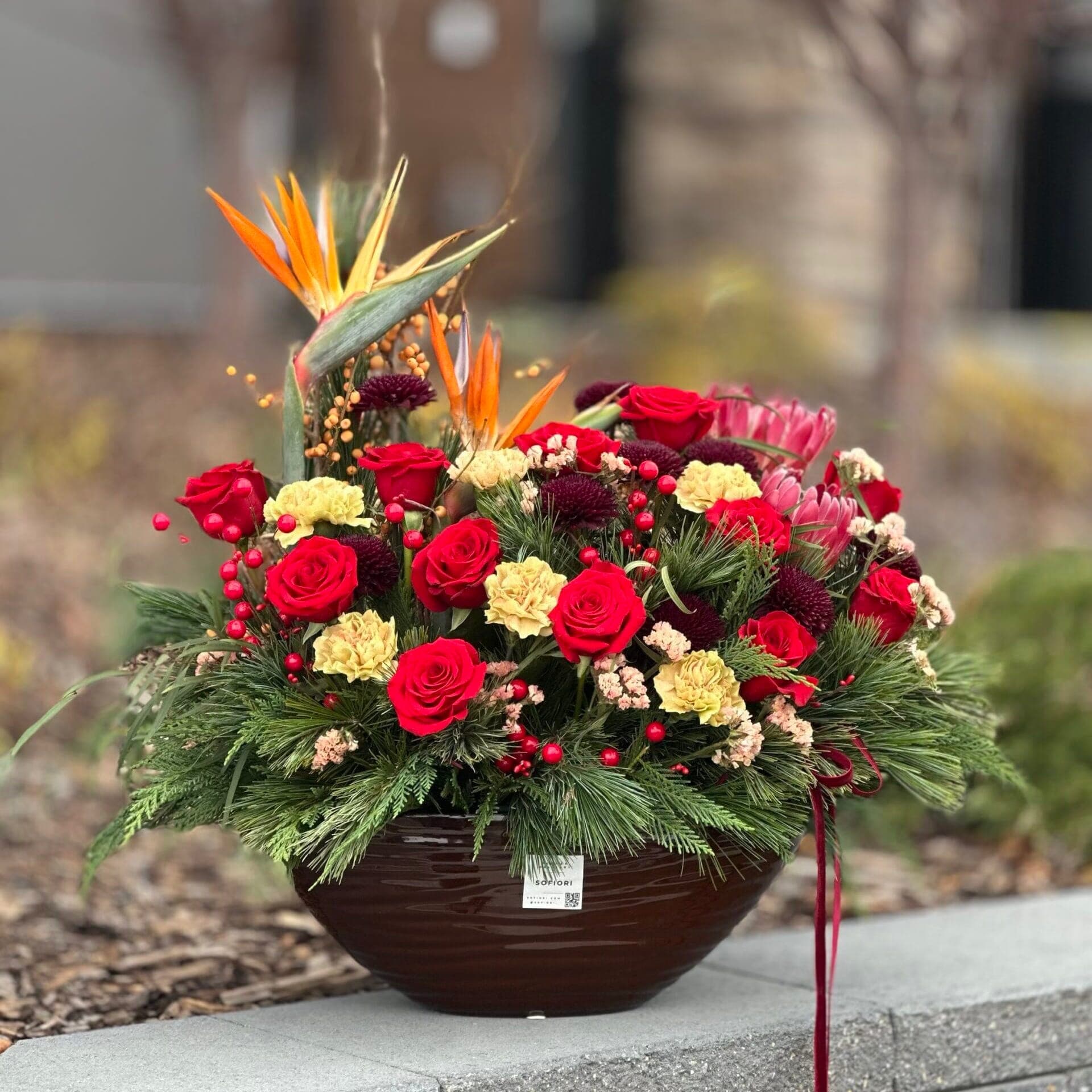
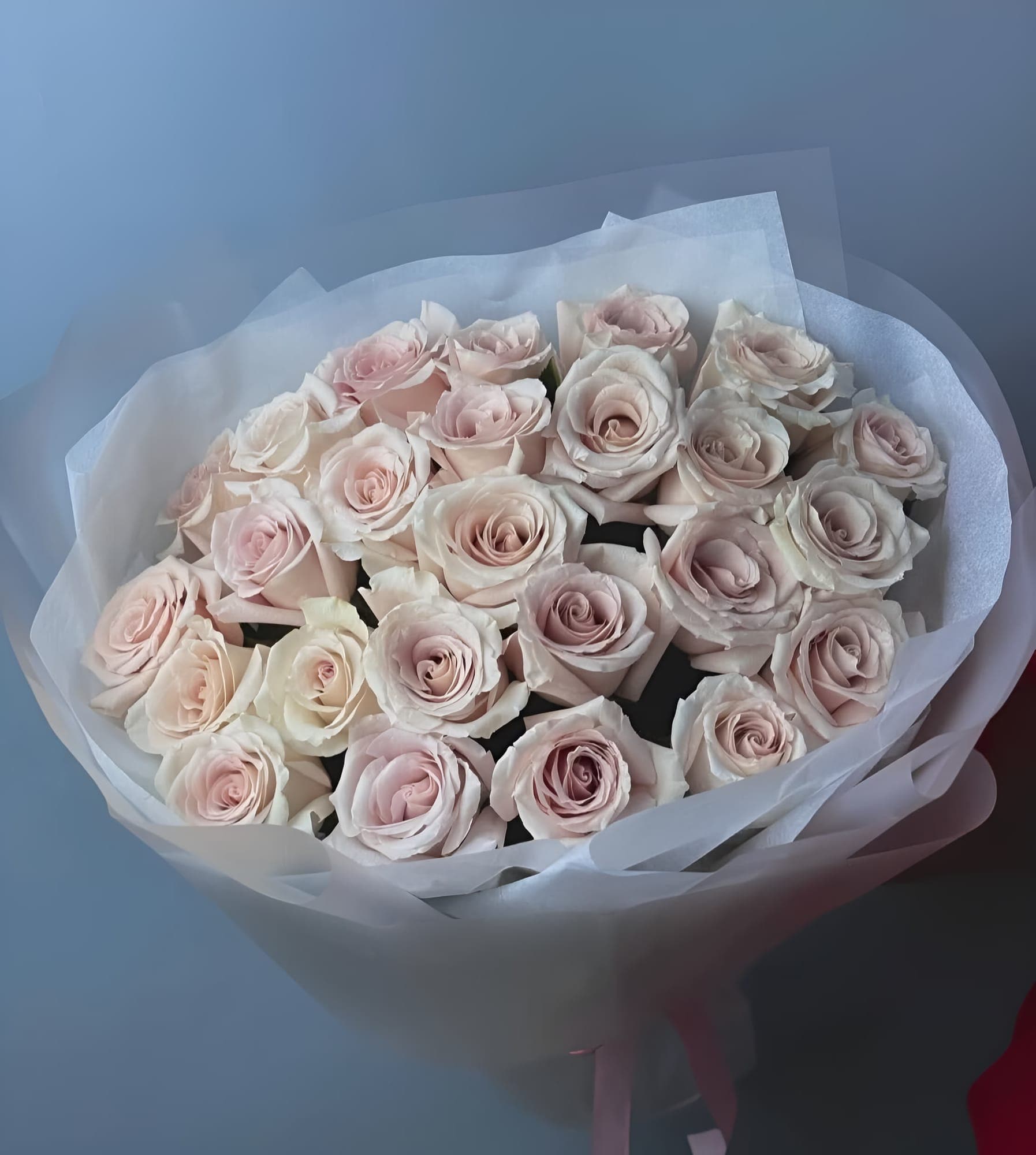
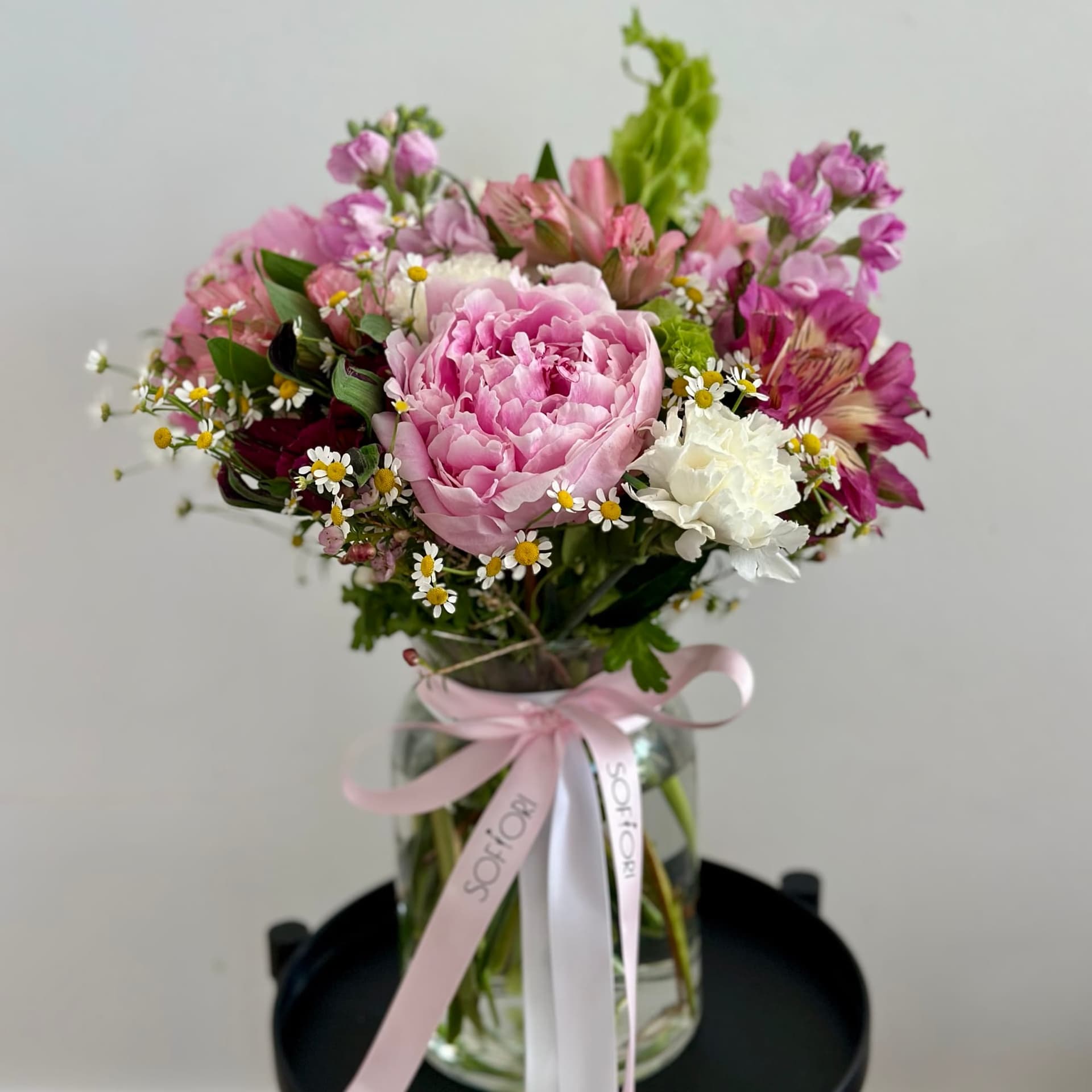
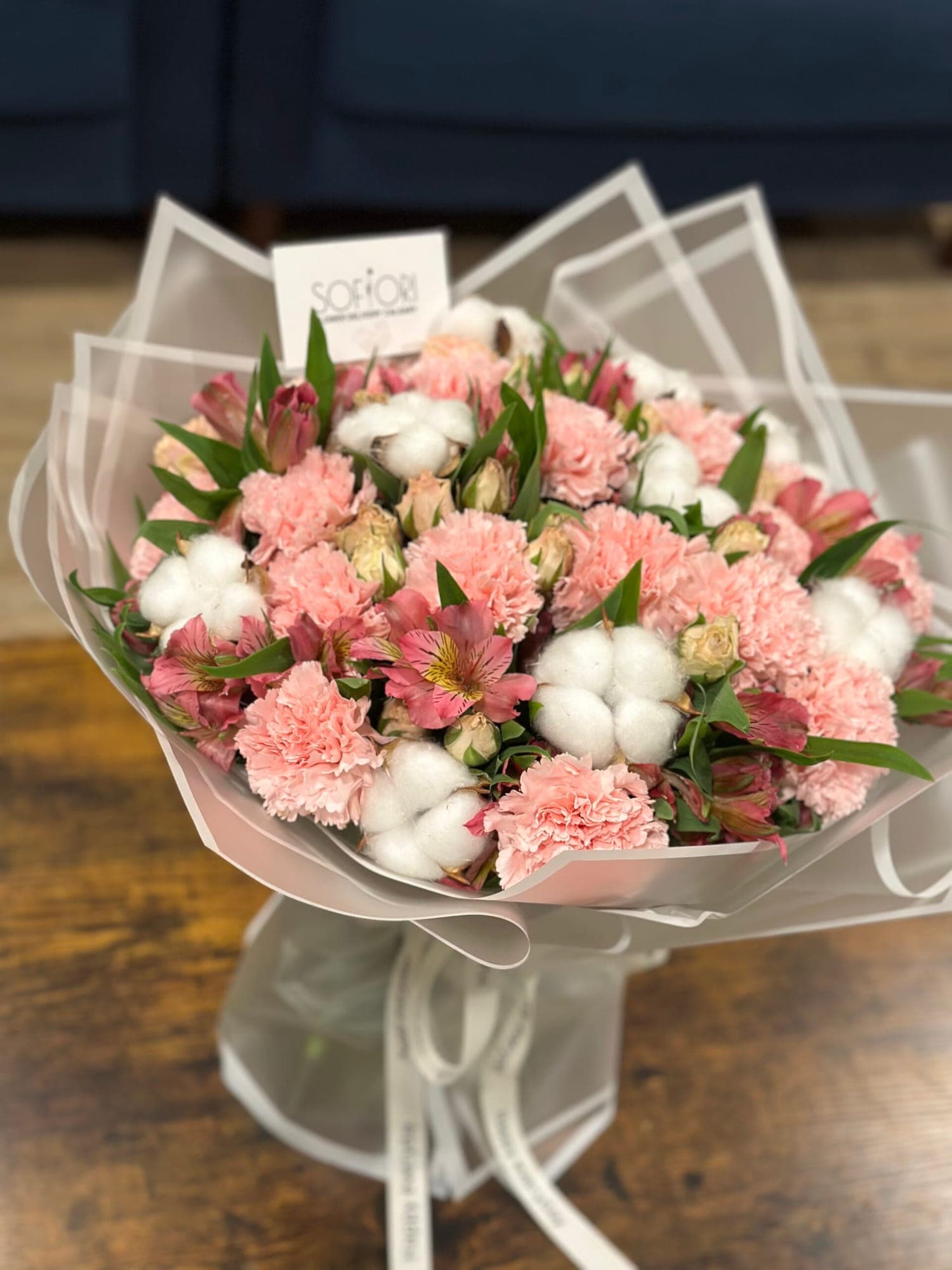
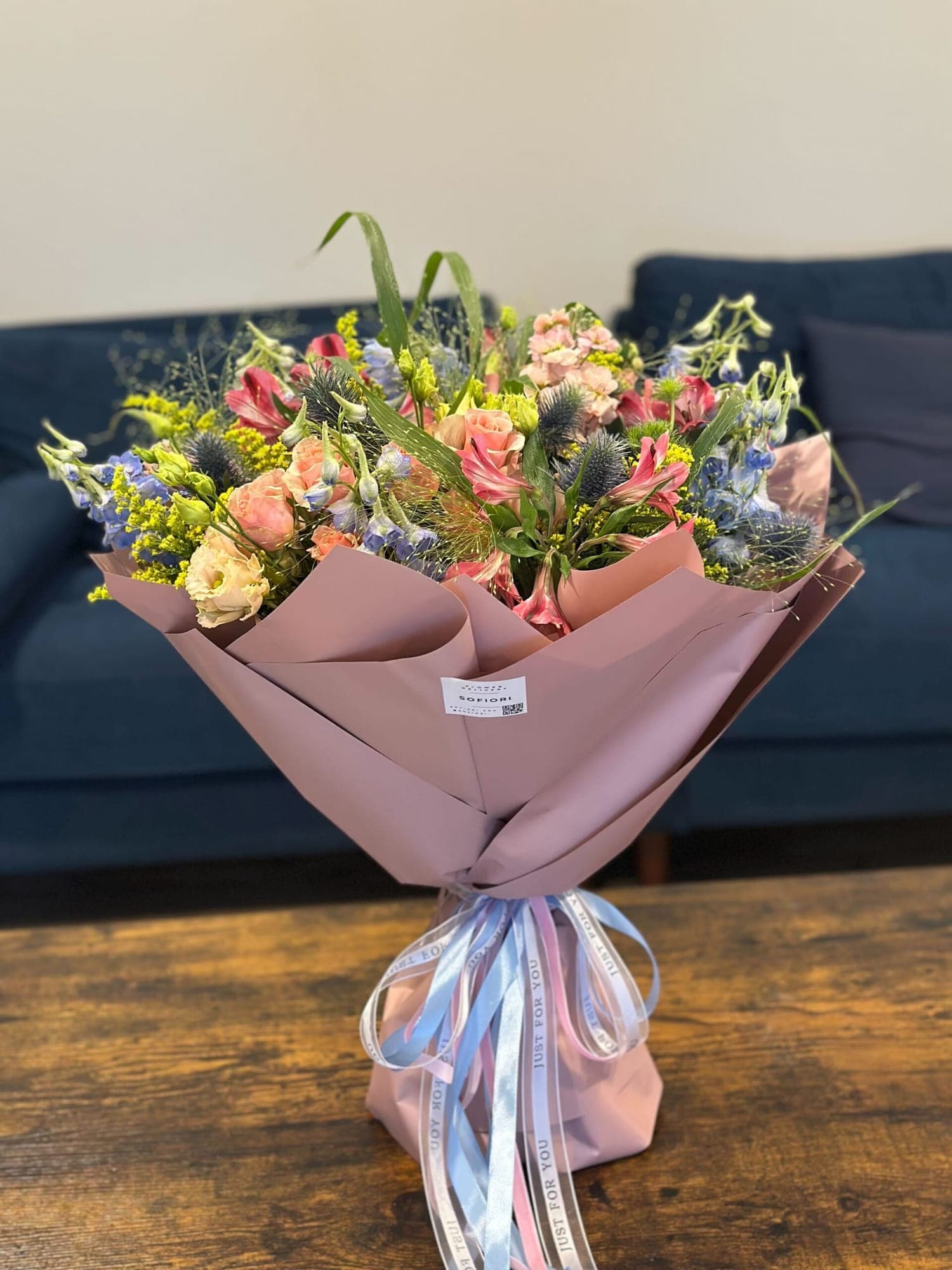
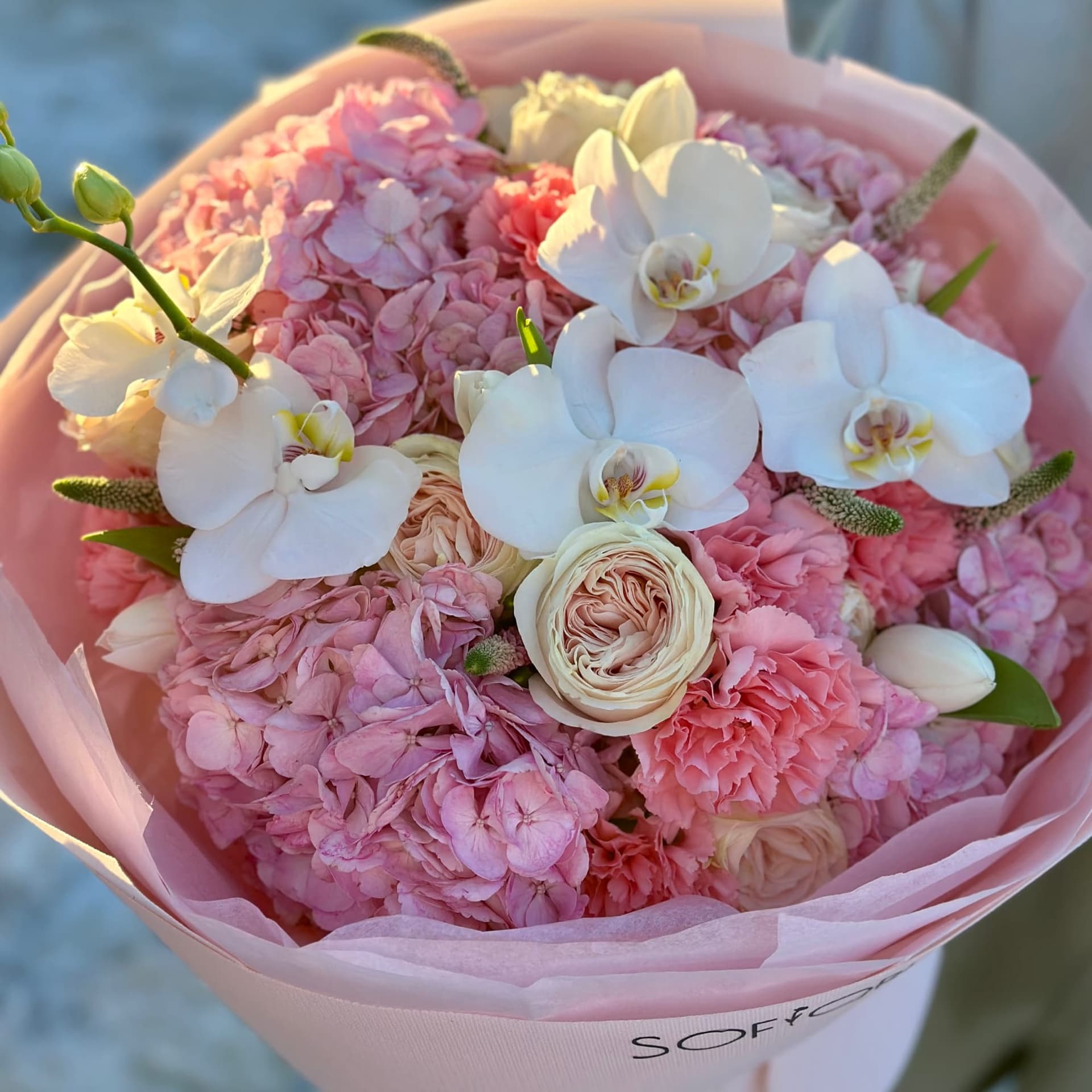
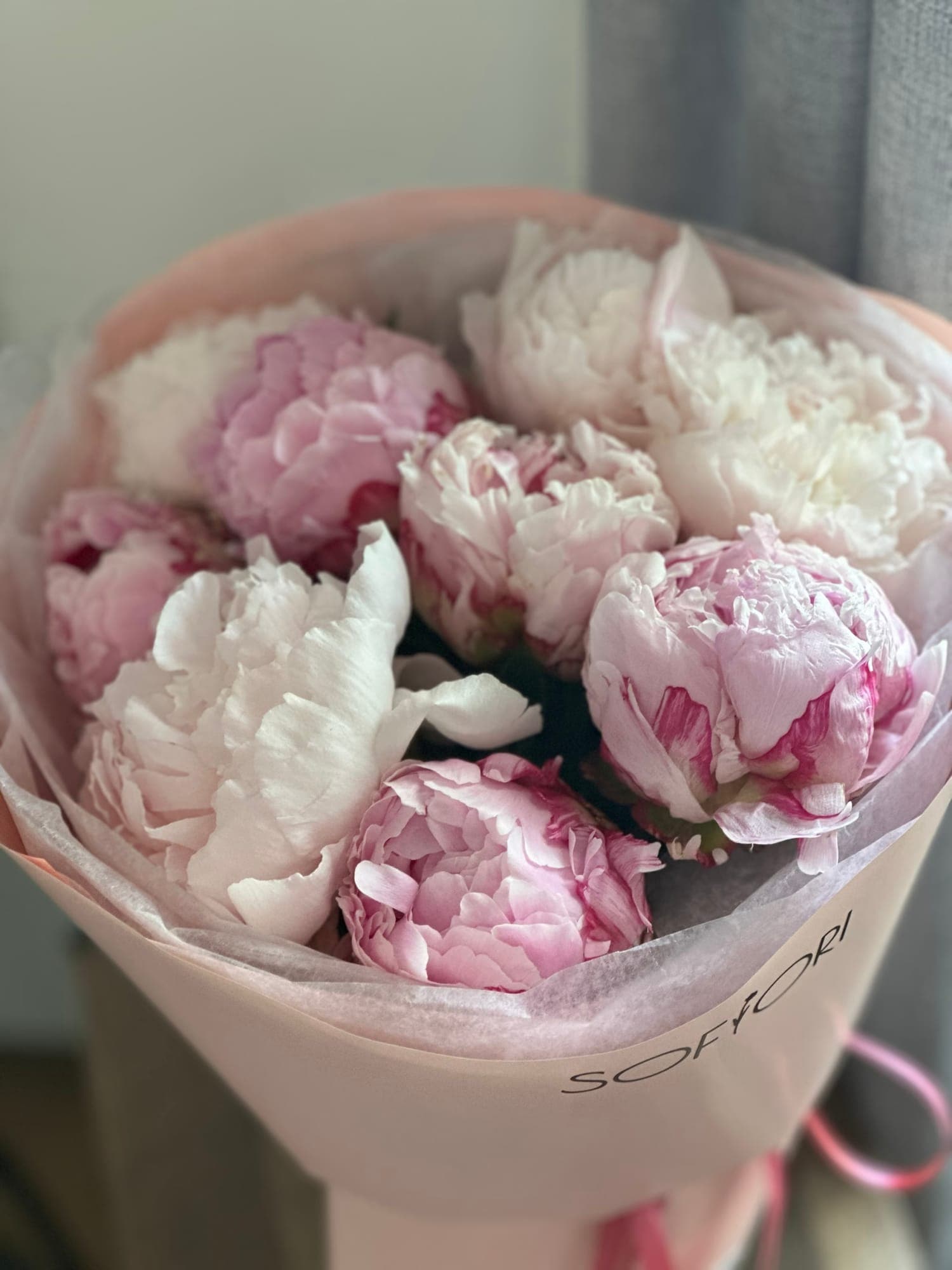
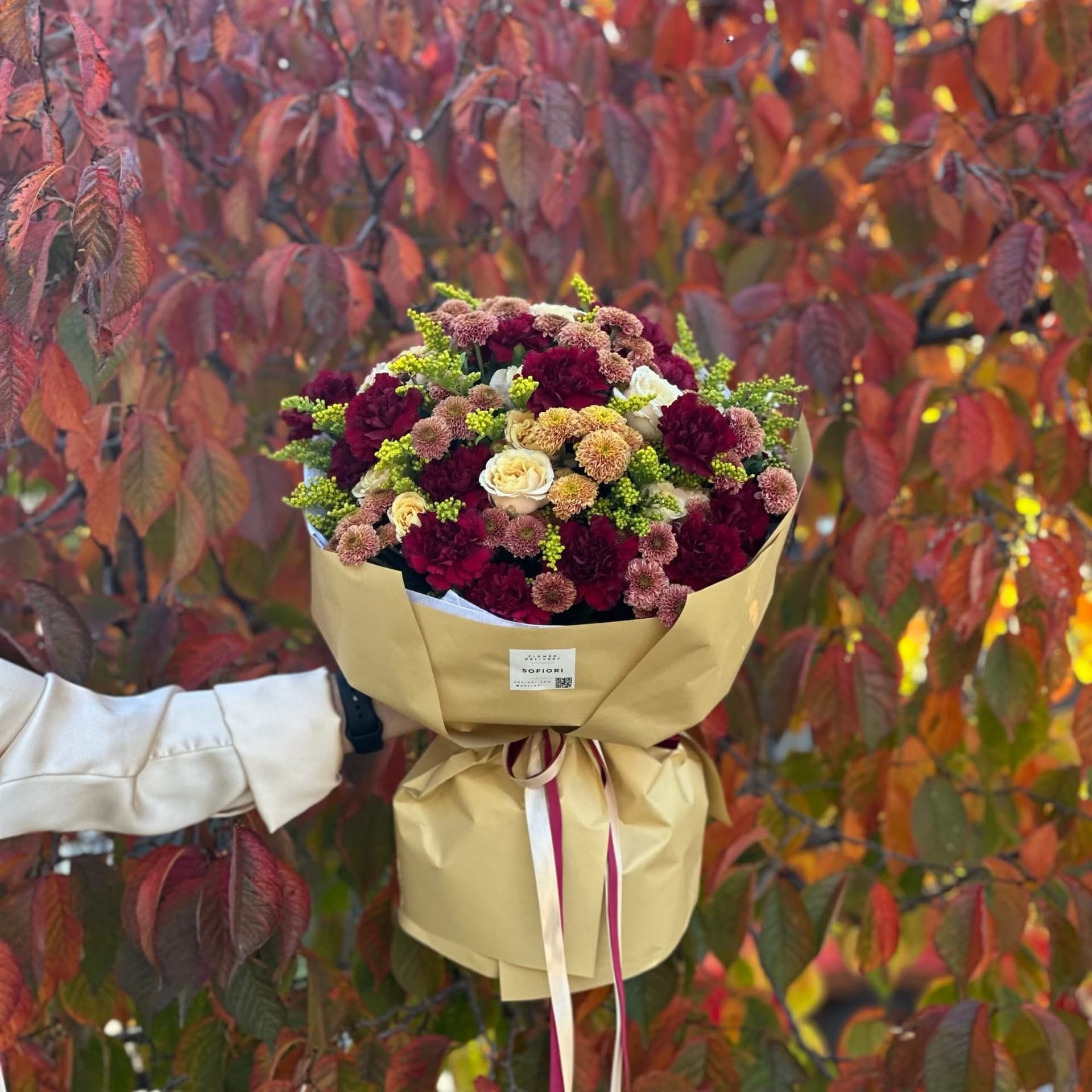
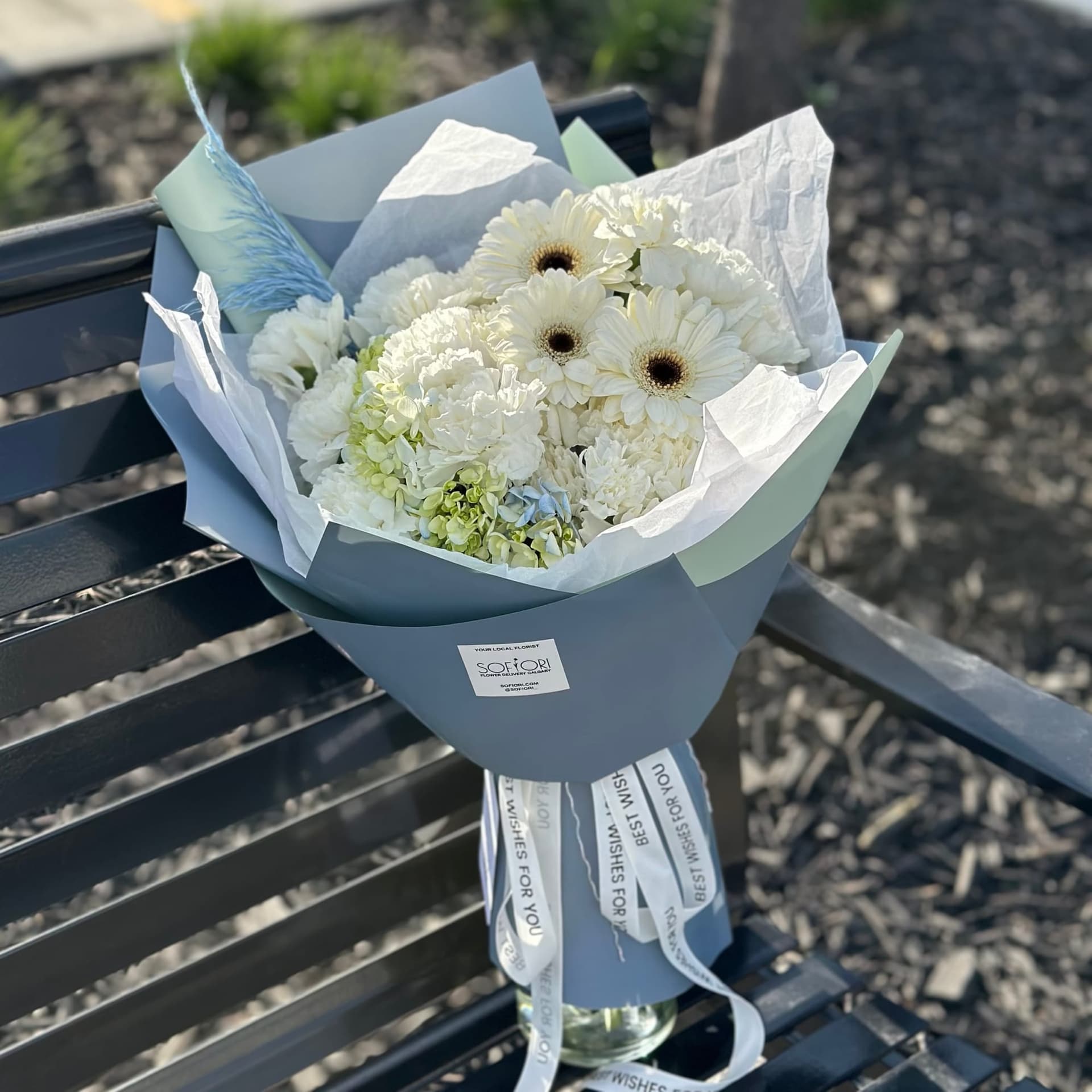

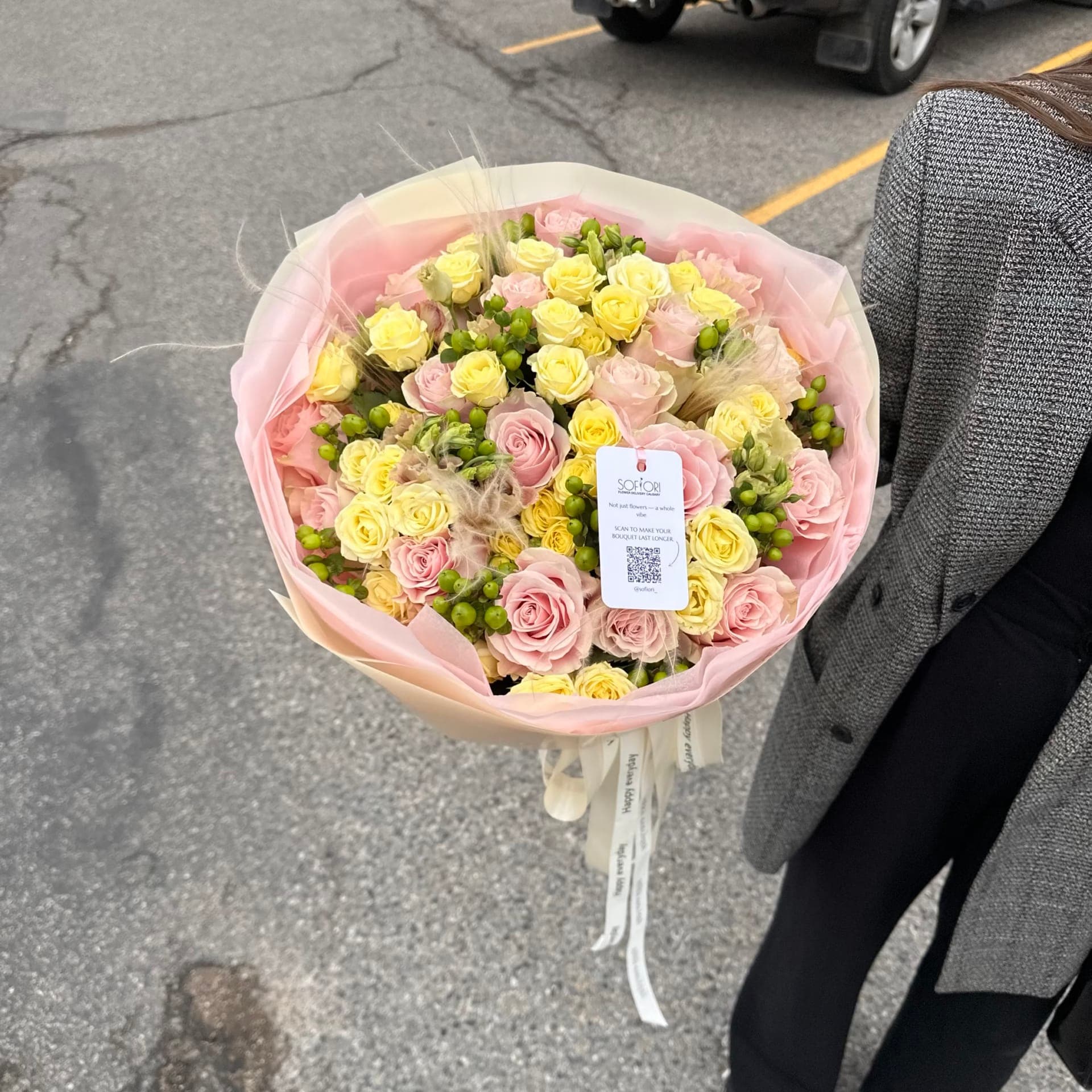
They just arrived
Caring for your bouquet
Most bouquets end early because of the water, not the flowers. Tap your flower:
Every bouquet, every time
Trim at an angle
Trim about 2 cm off the stems at an angle before they go in water, and a little more each time you change it — a flat, dried-out cut sits on the bottom of the vase and drinks almost nothing.
Water every day or two
Change the water every day or two and rinse the vase while you are there. Cloudy water is what actually ends most bouquets, well before the flowers themselves are done.
No flower food powders
Skip the flower food sachets. We do not use them and do not recommend them: plain clean water changed often does more, and a powder in water that is not changed only feeds the bacteria.
No leaves under water
Strip any leaves that would sit below the waterline. Underwater they rot, and that is what clouds the water in the first place.
Out of sun and drafts
Keep them out of direct sun and away from heat vents and drafts. A cooler spot overnight buys you days.
Away from fruit
Keep them off the fruit bowl. Ripening fruit gives off ethylene, and flowers read that as a signal to finish up.
Warm up before unwrapping
If they have been out in the cold, let them come up to room temperature before you unwrap them.
What your flower wants
Vases drawn to the same scale: a hydrangea wants nearly three times the water a tulip does.
Roses
15 cm water · 5–7 days
About 15 cm — check daily and top up
- Heavy drinkers
- Top the water up every day and change it fully every two days. Roses wilt visibly and fast if the vase runs low.
- Take the thorns off below the water
- Submerged thorns break down and foul the water within a day.
- Mist the leaves, never the petals
- Water sitting on rose petals leaves brown spots. A light mist on the foliage once a day is plenty.
Reviving a drooping rose. Re-cut the stem and lay the whole stem — not the head — in cool water for half an hour. Most come back.
Tulips
7 cm water · 5–10 days
About 7 cm — tulips want shallow, cool water
- They like it cold
- Cool water, and ice cubes on a warm day. Cold slows them down, and slower means longer.
- They keep growing
- Tulips add centimetres after cutting and lean toward the light. Turn the vase daily or they end up bowing one way.
- Keep them away from daffodils
- Daffodil sap is toxic to tulips. If both are in the house, stand them apart for a day before mixing.
Keeping them straight. Leave them in their paper for the first few hours — it holds them upright while they drink.
Hydrangea
20 cm water · 5–8 days
About 20 cm — check twice a day
- The thirstiest flower you will own
- Check the level morning and evening and never let it run dry. A wide, deep vase helps.
- Split the woody stem end
- The base is woody and blocks water. Crush or split the bottom two centimetres after cutting at an angle.
- Mist the head, generously
- Unlike roses, hydrangeas drink through their petals too. Misting the whole head once or twice a day is one of the best things you can do.
Reviving a wilted head. Submerge the entire flower head in cool water for twenty minutes. It almost always comes back.
Lisianthus
15 cm water · 5–10 days
About 15 cm — delicate stems, do not overfill
- Handle the stems gently
- Strip the lower leaves without bending the stem, and cut with a sharp blade — a crushed cut blocks their fine channels.
- They open slowly, one bud at a time
- That is normal. New buds keep opening for days, so the arrangement looks fuller as the week goes on.
Do not crowd them. Give them room in the vase. Packed stems trap humidity and the petals go over faster.
Ranunculus
10 cm water · 7–10 days
About 10 cm — hollow stems, keep it shallow
- Cold water, cool room
- In a heated Calgary house the water warms quickly — check it more often than you would for anything else.
- Closing at night is normal
- They shut in the dark and open again in warmth and light. That is health, not wilting.
Bright morning light. A spot with morning light encourages them to open fully.
Lilies
15 cm water · 8–12 days
About 15 cm — change every two days
⚠️ Lily pollen is highly toxic to cats. If there is a cat in the house, pinch the stamens out before the buds open — the pollen also stains fabric permanently.
- Take the stamens out as buds open
- It stops the staining and keeps the bloom going longer.
- They open one at a time
- The arrangement looks fuller in two or three days than it does on the first.
- Nowhere near the fruit bowl
- Lilies are the most ethylene-sensitive flower in this list. Ripening fruit finishes them early.
About the scent. Oriental lilies are strongly fragrant. In a bedroom that is a lot — a larger, ventilated room suits them better.
Carnations
15 cm water · 10–14 days
About 15 cm — rinse the vase at every change
- Among the longest-lasting flowers there are
- Water every two days and a trim, and they hold colour for nearly a fortnight.
- Away from fruit — bananas especially
- Ethylene visibly shortens them.
- Cool rooms add days
- Away from sunny windows, vents and appliances. A few degrees is worth several days.
Guard petals. If the outer petals look bruised, peel them off — the ones underneath are perfect.
Peonies
17 cm water · 5–7 days
About 17 cm — they drink hard as they open
- Tight buds are a good sign
- Room-temperature water and a warm spot, and they unfurl over a day or two.
- Once open, move them somewhere cooler
- It slows the ageing and keeps the petals looking fresh.
Coaxing a stubborn bud. Cup it in warm hands for a few seconds, then put it back in indirect light.
Alstroemeria
15 cm water · 10–14 days
About 15 cm — change every two days
- The best value in the vase
- Peruvian lily easily runs ten to fourteen days on water changes and trims alone.
- The foliage rots fast
- Strip anything below the waterline, and pull yellowing leaves at every water change.
Making it last even longer. Pinch off spent blooms — it pushes the remaining buds to open.
Chrysanthemums
15 cm water · 10–14 days
About 15 cm — forgiving, just never dry
- The hardiest flower here
- With water changes and trims they run the full two weeks.
- Strip the lower half
- Mum leaves below the water break down quickly and cloud it. Check daily for any that slipped under.
Cool nights. Moving them to a cooler room overnight noticeably extends them.
Orchids
10 cm water · 10–14 days
About 10 cm — fresh water every two days
- Keep them warm
- Orchids are tropical. Below about 10 °C the blooms bruise — never leave them in a cold car or by a drafty door.
- Away from fruit
- Orchids are very sensitive to ethylene from ripening fruit; it makes the buds drop.
- Trim a little, often
- A small fresh cut every few days keeps the stems drinking.
One bloom fading?. Snip off just that bloom — the buds above it keep opening.
Baby’s breath
10 cm water · 7–10 days
About 10 cm — change it every two days
- Fresh water, often
- The tiny flowers cloud the water quickly. Rinse the vase and change the water every two days.
- It dries beautifully
- When it starts to fade, hang the bunch upside down somewhere dry — it keeps for months as dried flowers.
A faint scent is normal. Fresh gypsophila has its own earthy smell. It fades as the stems drink.
Gerberas
5 cm water · 7–10 days
About 5 cm — only a few centimetres — the stems rot in deep water
- Shallow water
- Gerbera stems are soft and furry: deep water makes them rot and the heads droop. A few centimetres is enough.
- Cut on an angle, often
- A fresh angled cut every two days keeps the heads up.
Drooping head?. Re-cut the stem and stand it in shallow water for an hour — most lift again.
Send someone flowers too 💐
Delivered today if you order by 7:59 pm · anywhere in Calgary
Hand-tied in our Calgary shop, delivered across Calgary. 10% off your first order with SOFIORI10 — added at checkout.
Shop bouquetsFlorist's choice from $75 →